



The US Department of Transportation has proposed measures to prevent Chinese carriers from flying over Russia on routes to and from the US

US air cargo supply chains could soon be dealt another blow as the US government has proposed prohibiting Chinese airlines from flying over Russia on routes to and from the US because of the competitive advantage it provides.
The US Department of Transportation (DOT) said in an order published on 9 October that Chinese airlines, including Air China, Beijing Capital Airlines, China Eastern Airlines, China Southern Airlines, Hainan Airlines, Sichuan Airlines and Xiamen Airlines, are impacted.
Hong Kong-based Cathay Pacific was not listed, but also flies over parts of Russia on some routes to the US.
"Specifically, the Department proposes to prohibit the above-named Chinese air carriers from utilising Russian airspace in their passenger or combination services between China and the US," said the DOT.
The current situation whereby Chinese airlines can save time, fuel and costs by flying over Russia puts US carriers at a disadvantage, indicated the DOT.
In the order document, the DOT said "we have tentatively determined that the practice by some Chinese air carriers in exercising Russian overflights in the conduct of certain China-US scheduled combination service is unfair and has resulted in substantial adverse competitive effects on US air carriers in the US-China combination market".
US airlines and the air cargo industry are also currently affected by the US government shutdown.
The proposed measure by the US DOT, which has been determined in accordance with the US-China Civil Air Transport Agreement, currently only affects passenger aircraft carrying belly cargo on China-US routes. The DOT said that while freighter operations were not affected, this could change in the future.
"At this time, the Department has tentatively determined not to condition in any manner the permits and exemptions held by Chinese air carriers that conduct solely all-cargo services.
"The agreement provides for far more liberal all-cargo service route rights, and the nature of the competitive playing field inherent to all-cargo services in the US-China market is distinctly different as compared to that of combination services.
"On that basis, we find it prudent to limit our tentative imposition of the condition to the authorities held by the above-captioned Chinese air carriers, but we retain the right to reconsider our decision."
When the current Russia-Ukraine conflict began in February 2022, airspace sanctions were imposed on Russia by many countries, including the US and all European Union member states, while Russia, in turn, banned other countries from flying over Russia. This airspace exclusion also effectively extended to Ukraine because the conflict between the two countries made it unsafe to fly over the country.
The exclusions meant that airlines that would normally fly over Russia on long-haul routes had to change their routes to avoid the country, adding time, fuel and additional costs to their operations.
Some airlines stopped flying to some destinations in China entirely. For example, Virgin Atlantic stopped its service to Shanghai in October 2024 due to increased costs. The move saw the airline cease flights to China altogether as Shanghai was its only route into the country.
British Airways also suspended flights from London to Beijing in October 2024 until at least November this year.
The current DOT proposal comes after China, in May, reportedly lifted a ban on airlines in the country taking delivery of aircraft from US-based Boeing following talks between the US and China as the two countries continued tariff measures.
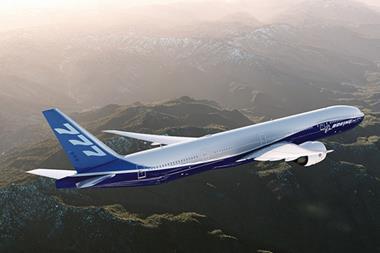
In September, Boeing then delivered the first of two 777 freighters to Suparna Airlines in what was the first freighter delivery to an airline in China since the US-China trade war reignited.
China's decision to block Boeing aircraft deliveries came as the aviation and air cargo industries had already been blighted by aircraft supply chain delays and predicted future widebody shortages.