




Alliance Ground International (AGI) aims to expand into Europe, Canada, Mexico and South America as it continues to build its business at growing cargo airports across the US.
US ground handler AGI is planning to expand its air cargo operations into Europe through acquisitions.
AGI originally announced its ambitions to move into Europe in 2022 during the pandemic cargo boom, but planned to wait until the market had normalised before executing its plans.
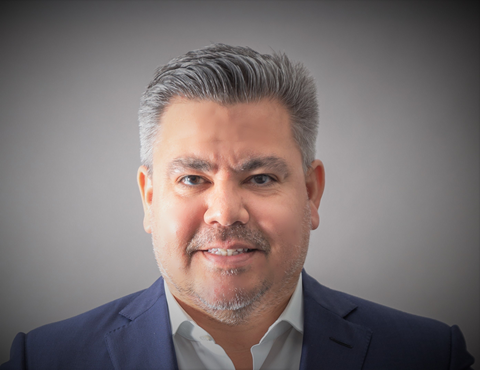
Chief executive Jared Azcuy says that AGI recognised the high demand and rates during the pandemic might provide a false sense of security and had wanted to wait until the air cargo market had normalised to see what true operating conditions would be.
However, he says the subsequent challenges in Europe's air cargo market with the Ukraine-Russia war and the Red Sea conflict saw it further delay its plans.
Now, the company is confident that this is the right time to move into the European cargo market and it is actively seeking to acquire European companies.
"Europe did go through a little bit of a slump, so it delayed our plans into Europe. But we've made a great short list of the companies we want to engage with, which we intend on executing later this year," says Azcuy.
AGi has been working with ex WFS chief executive and industry consultant Olivier Bijaoui since 2022 to refine its entry into the European market.
He adds: "We have an extensive network in the US, but now we want to expand it out into Europe. We have engaged with Olivier because it's important to us what partners we choose.
"Because we are not just acquiring a company, we're acquiring its people, and so culture and shared values are very important to us. We did a very rigorous screening process."
He adds: “We want them to be our partners. We don't have a presence here, so we're going to depend on these folks to run these business units for us.”
Getting the right cultural fit is important for AGI in order to be in the best position to integrate a new company. In fact, this is the top priority, stresses Azcuy.
“Culture has been the most important consideration when we looked at acquisition targets, for sure. The most costly integration could be that the culture doesn't fit, so regardless of what that financial consideration is, culture is number one.
“We have a very unique culture that we do not want to change, which is we're accessible, flexible and nimble. That is important to us and so we we're very protective of that.”
AGI’s selective approach to acquisitions based on culture has proved its worth in the successful purchases and integrations of US companies, MIC Cargo (Maestro), Total Airport Services (TAS) and Airport Terminal Services (ATS), which have been carried out since 2021.
As well as Europe, Azcuy said AGI is also planning to expand into Canada and Mexico later this year through acquisitions.
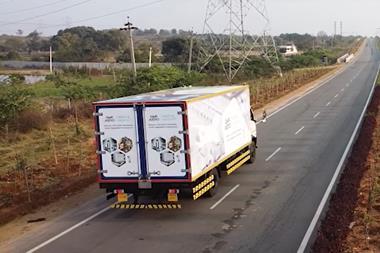
In April, AGI and fellow ground handler Atlantis Transportation Services/ACI Air Cargo launched a new partnership on trucking between airport gateways in North America.
Atlantis offers less-than-truckload and full-truckload services between major US gateways, along with dedicated routes between Montreal (YUL) and Toronto (YYZ).
“The idea of the partnership was to expand our network into Canada,” notes Azcuy.
South America is also a major target because AGI currently doesn’t have any operations in the continent, and AGI is already engaged in talks over potential acquisitions.
“It'd be great to have (a footprint). South America is good for not only improving our network, but also from a regional standpoint," says Azcuy.
Beyond big airports
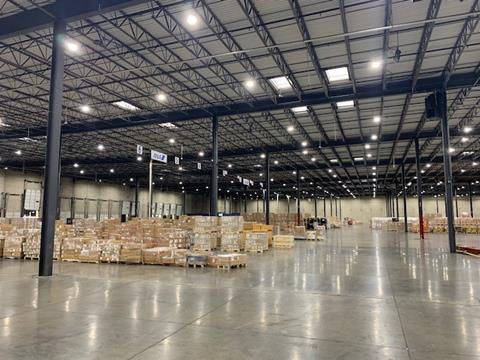
Meanwhile, in the US, the company has set its sights on expanding its cargo handling services into third-tier airports, as measured by cargo volumes.
Having acknowledged that the handling market is saturated in the big hubs - Miami, JFK in New York, Chicago and Los Angeles – AGI has been expanding into second-tier airports and is now targeting tier three airports.
“Now that we have a firm grasp on tier one and tier two cities, we are focusing on tier three cities,” outlines Azcuy
“We're being opportunistic in that sense. We've got great long-term partners and that takes us to these cities. It's how we expanded the network to where we're at today.”
AGI has recently started operating at Pittsburgh International (PIT) in Pennsylvania, Austin-Bergstrom International (AUS) in Texas, and Orlando International (MCO) in Florida, where it has been awarded contracts by Emirates and Air France.
The drive towards smaller airports is not a new phenomenon. In Europe, smaller airports gained more cargo traction during the pandemic when companies, including airlines, ground handlers and road feeder services specialists, targeted them for operations as they looked for solutions to congestion.
Looking at its overall US operations, the company has most recently been awarded a handling contract by Etihad, a new customer, for its cargo operations at Hartsfield–Jackson Atlanta International Airport (ATL).
A major win last year was AGI's partnership with Kuehne and Nagel (K+N) to handle cargo at Birmingham–Shuttlesworth International (BHM) in Alabama.
Azcuy is optimistic about the second half of the year, following the industry’s upheaval in the first half due to the impact of tariff and de minimis changes on supply chains, when, he says, AGI “lost about 15% of volume for a 10 day period". Meanwhile, e-commerce represents about 5% of AGI’s overall earnings.
“We're expecting the third quarter and fourth quarter to be above average," he states.
Last year, AGI won 64 new contracts. “This year we're already halfway through that, and so we're on track," confirms Azcuy.
In addition to its business expansion, AGI is taking steps to strengthen its relationships with cargo stakeholders across the industry, an environment where airlines traditionally call the shots over handlers.
“Traditionally, the carriers are the ones that hire you. But there's been a change in the traditional method of cargo handling.
“AGI tries to partner up with the forwarding community, local community and corporate communities, so that we have great direct, local relationships with our customers."
He adds: “In the last five years, we've gotten a lot closer to the forwarding communities.”