


TAM Group’s core business in Southeast Asia has put it in a strong position with the further shift of supply chains from China to the region.
TAM Group has weathered the tariff fluctuations and de minimis storm of the first half of the year with resilience enabled by its presence in Southeast Asia.
Anindam Choudhury, vice president commercial at the Hong Kong-based GSSA says that recognising the significance of the China Plus One strategy to reduce trade dependence on China trade in good time has paid off.
“Since the onset of Covid-19, supply chains have gradually shifted away from China, aligning with the China Plus One approach," he says. "Southeast Asia has become increasingly critical in this landscape.
"Over the past five to seven years, TAM Group has strategically expanded its presence in Southeast Asia, which puts us in a strong position today."
The passenger and cargo GSSA has maintained its strategy to expand and reinforce its operations in Southeast Asia, despite the disruptions caused by tariffs and changes to de minimis shipment regulations. These challenges have underscored, rather than deterred, the ongoing commitment to investment in the region.
TAM remains confident in the stability of regional supply chains, supported by ongoing investment in infrastructure.
“I believe the production chain will not suddenly shift away from Asia, as establishing a primary or alternative base takes time," remarks Choudhury.
E-commerce in the region has been growing since the mid-2010s and accelerated during the pandemic, as highlighted by the 2022 McKinsey & Company study ‘E-commerce is entering a new phase in Southeast Asia. Are logistics players prepared?’, along with more recent research from IATA.
With the uncertainties regarding the de minimis exemption for goods shipped from China to the US, e-commerce in Southeast Asia experienced further growth as companies sought to shift supply chains.
Now, with the de minimis rule changes set to extend globally, it remains to be seen what impact this will have on Southeast Asia.
However, TAM’s Hong Kong headquarters, combined with its presence in mainland China, position the company at the heart of e-commerce activity. Choudhury expects e-commerce air cargo consumer demand to stay strong despite ongoing economic turbulence.
In any case, TAM is not overly worried about the effects of tariff disruptions on its business.
“As of now, customers have remained steady. No one has exited any of the markets," points out Choudhury. "And our portfolio is well diversified; it is not solely reliant on China-US trade. For example, a significant volume moves from China to Europe.”
South America expansion
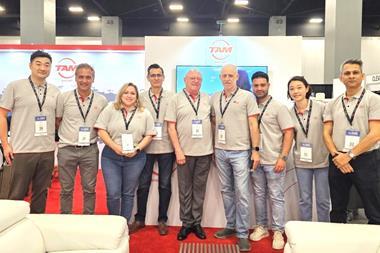
TAM, with nearly 250 employees and 38 offices across 18 countries worldwide, has recently opened several new offices to support both existing and new airline partners.
“Over the past three years, we have established new offices in Southeast Asia, including Thailand and Vietnam,” says Choudhury.
TAM is also actively pursuing growth beyond Southeast Asia, exemplified by the recent opening of an office in South Korea.
Latin America is another key focus area due to strong trade demand between the region and China.
“We are seeing significant strengthening in our Latin America-China trade lane, driven by large volumes of seasonal shipments such as salmon and cherries,” Choudhury explains.
Trade flows are bidirectional, he adds: “There is substantial e-commerce moving from China to South America, so we are supporting both ends of the market alongside our partners.”
In response to this growing demand, TAM has opened new offices in Mexico City, Brazil, and Chile, where it benefits from a partnership with key Chinese and Latin American carriers.
Choudhury highlights that TAM’s position is further strengthened by its operations in the US. Looking at the company’s current footprint, he affirms: “Our presence is now well established.”
He emphasises that TAM is therefore “taking a measured approach to further growth”, carefully selecting where to invest in expansion.

Changing Expectations
While continuing its geographical expansion, TAM has observed a shift in demand towards a broader range of value-added services, prompting an evolution in its structure from cargo sales and marketing to include business development and analysis.
Choudhury says that in the past, the relationship between an airline and a GSA was clearly defined as a sales partnership.
“Now, airlines expect much more than just capacity sales. They want their GSSA to be fully aware of market developments and to respond with greater agility.”
TAM’s relationships with partner airlines remain strong, currently holding around 30 contracts. This stability is due in part to the long duration of some partnerships; for instance, Saudia has collaborated with TAM for almost 40 years.
The GSSA adopts a tailored approach for both longstanding and new customers, says Choudhury.
“We design highly customised strategies for each carrier. Sometimes, we represent a carrier in three or four different markets, and each market requires a distinct approach. So, a one-size-fits-all method is not what we offer or what carriers expect.”
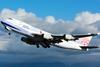
Several new contracts have been signed this year, including a deal with China Cargo Airlines in the Philippines, and since June, a collaboration with Air Canada Cargo in the country.
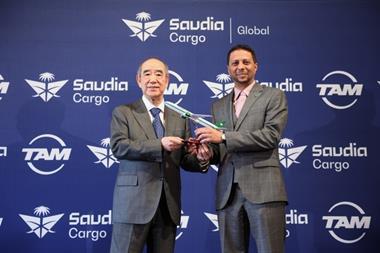
At the end of June, TAM Group signed a joint venture (JV) agreement with Saudia Cargo, a partner since 1986. Under this JV, named Saudia Cargo Global, TAM Group and Saudia Cargo will work together on expanding its presence in the region through freighter operations, e-commerce logistics solutions, and specialised pharmaceutical services.
Regarding the joint venture, Choudhury comments: “I believe this is one of the first of its kind in the cargo industry. Our involvement goes far beyond the usual GSA setup.”
TAM also continues partnerships with GP Group in Thailand, TP Cargo in Vietnam, and Dutch GSA Euro Cargo Aviation, covering Europe among other regions.
While joint ventures are central to TAM’s growth strategy, mergers and acquisitions are not currently part of the plan. “We engage frequently in joint ventures, but M&A is not on the horizon," confirms Choudhury.
This reflects TAM’s aim for carefully controlled growth to avoid overexpansion and losing business oversight. Choudhury adds: "We strive to keep a hands-on approach in everything, to ensure we manage things carefully and respond effectively.”
Investments in technology
Technological development is playing an important role in helping TAM remain competitive. In line with the company’s rebranding in 2022, TAM has implemented CRM software and is actively supporting the adoption of e-airway bills among its airline customers.
The GSSA is also investigating AI-driven logistics solutions to enhance areas such as customer support, pricing and network strategy and compliance, as well as market forecasting and analysis.
However, this is still in the experimental stage, and TAM is working to determine which AI technologies are suitable, how they can be applied, and whether the company is ready for full integration.
“I believe it will take another six to nine months to fully adopt these technologies and understand how they truly benefit both the carriers and ourselves,” says Choudhury.
That said, TAM has already been utilsing AI-enabled predictive software. “For instance, in forecasting, we input extensive data and the analytics have become more accurate and insightful, reducing much of the guesswork.”
Not everything can be predicted, but TAM is confident on a “pretty strong second half.”
The GSSA is predicting growth of 10-12% over last year, but Choudhury is quick to stress that this might change depending on what happens in the market.