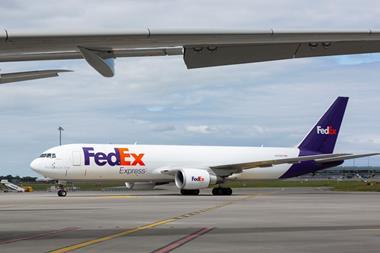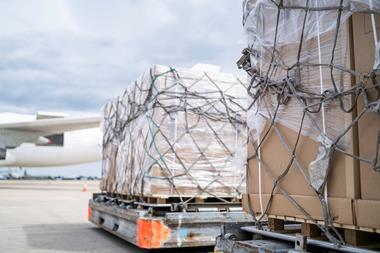



The Federal Express Corporation hubs at Guangzhou Baiyun International Airport in China and Kansai International Airport in Japan have been awarded CEIV Pharma certification by IATA.
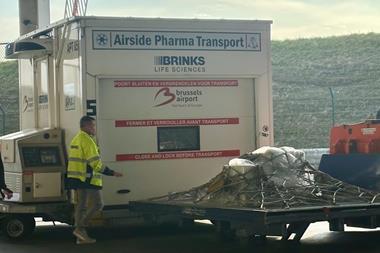
The Center of Excellence for Independent Validators (CEIV) Pharma certification promises the highest standards in the handling and transportation of time- and temperature-sensitive healthcare products such as pharmaceuticals and vaccines across air networks.
According to a FedEx statement, this certification is “a testament of the strength of FedEx’s quality management system and its expertise in delivering fully compliant, end-to-end logistic services that meet the rigorous demands of the increasingly complex and highly regulated pharmaceutical industry”.
“Healthcare innovation demands smarter, faster and more resilient supply chains,” noted Kawal Preet, president, Asia Pacific at FedEx.
“As Asia Pacific rapidly emerges as a global hub for clinical trials and biopharma manufacturing, the need for secure, compliant and technology-enabled logistics is more important than ever.”
Preet continued: “Our proven expertise in building intelligent cold-chain solutions is designed to protect product integrity, ensure regulatory compliance and deliver peace of mind to our customers.
“By combining our global network with AI-driven logistics and real-time monitoring, FedEx is helping healthcare and life sciences companies unlock speed, scale, and reliability, supporting the next wave of healthcare innovation across the region.”
Growing market
FedEx pointed to the forecast from Mordor Intelligence that the Asia Pacific pharmaceutical logistics market will grow from a value of $163bn in 2025 to $225bn by 2031, reflecting a compound annual growth rate (CAGR) of 6.68%.
Additionally, according to Novotech, the region accounts for approximately half of all global clinical trials.
FedEx is supporting this market through its International Express network, customised time-critical Special Services (SpS), and a global network of Life Science Centers in Incheon (Korea), Singapore, Tokyo (Japan), Mumbai (India), Memphis (the US) and Veldhoven (the Netherlands).
The company’s extensive healthcare infrastructure also includes more than 130 cold-chain facilities worldwide.
As of now, 19 FedEx facilities worldwide operate under the CEIV Pharma quality framework but, looking ahead, the certifications of Guangzhou Baiyun and Kansai International form part of a broader FedEx initiative to expand CEIV-compliant infrastructure around the world, the express services giant said.
Pilot problems in Memphis
In other less positive news for FedEx, company pilots have expressed their continued displeasure with protracted contract negotiations.
A group of pilots represented by the Air Line Pilots Association, International (ALPA) conducted an informational picket on June 3 at the FedEx Corporation’s executive offices in Memphis, Tennessee.
The demonstration aimed to “symbolically represent all the employees being left behind while the Corporation closes its fiscal year”, a statement from ALPA said.
FedEx and ALPA have been in protracted contract negotiations for over four years now, the statement continued.
“FedEx has had four years to do the right thing, but instead it has chosen to invest in shareholders over its employees,” said Captain Jose Nieves, chair of the FedEx ALPA Master Executive Council.
“The pilots are done waiting. We’ve delivered through crisis and transformation, and we expect to be treated like professionals who enable corporate success.”
The parties met under federally mediated bargaining sessions as recently as last week, and “We’re looking forward to striking a deal that reflects a bright future and recognizes the value of our efforts to this company,” Nieves said.