IATA and Worley Consulting analysis concludes slow technology rollout and limited production capacity beyond HEFA facilities remain critical barriers to achieving SAF targets
A study by IATA and Worley Consulting has stated that technology, not the availability of raw materials is the main bottleneck to the roll-out of Sustainable Aviation Fuel (SAF) and net zero aviation.
The report concluded that there is enough feedstock - that meets stringent sustainability criteria and do not lead to changes in land use - to enable the airline industry to achieve zero CO2 emissions by 2050.
However the roll-out of technology to enable SAF to be produced from varied sources is slow. Currently the only commercially scaled SAF production facilities use hydroprocessed esters and fatty acid (HEFA) technology such as converting used cooking oil into SAF.
These face competition with other potential users of the same feedstock so allocating biomass to hard-to-abate sectors such as aviation must be prioritised, the report said.
Biomass could produce more than 300m tonnes of the 500mt of SAF needed to achieve net zero by 2050. Some of this potential could be expanded by unlocking additional feedstocks or through efficiency gains and technology improvements.
Power-to-liquid (PtL) technology will be needed to produce the remaining 200mt and reach the 500mt target, the report continues. PtL, or e-SAF, uses renewable electricity to produce hydrogen, which is then combined with carbon dioxide to form synthetic kerosene and would allow the fuel to be made from multiple sources.
This will require reliable access to low-cost renewable electricity, hydrogen and carbon capture systems.
However, in the meantime, maximising volumes of cost-effective bio-SAF will reduce the pressure on e-SAF to bridge the gap.
For all technology, it will be essential to improve conversion efficiency, accelerate technology rollout, enhance feedstock logistics, and invest in better infrastructure to scale up commercial SAF production in all regions, found the report.
Government policies need to be coordinated to support innovation and investment to create a fully functioning SAF market while the energy industry needs to invest in SAF production capacity and align its business strategies with global decarbonisation goals.
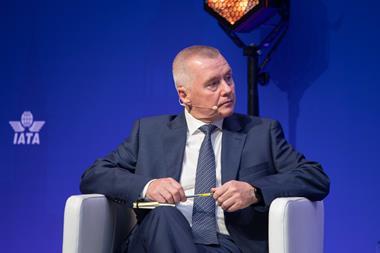
IATA director general Willie Walsh said: “We now have unequivocal evidence that if SAF production is prioritized then feedstock availability is not a barrier in the industry’s path to decarbonisation.
"There is enough potential feedstock from sustainable sources to reach net zero carbon emissions in 2050. However, this will only be accomplished with a major acceleration of the SAF industry’s growth. We need shovels in the ground now.”
IATA’s senior vice president sustainability and chief economist, Marie Owens Thomsen, added: “Governments, energy producers, investors, and the aviation sector must work together, de-risk investment, and accelerate rollout.
"Policy certainty and cross-sector collaboration are essential to unlock the scale we need. The time to act is now—delays will only make the challenge harder.”
Walsh concluded: “We can make SAF the solution it needs to be for aviation’s decarbonisation. The potential to turn SAF feedstock into real SAF production is in the hands of policymakers and business leaders, particularly in the energy sector. We have just 25 years to turn this proven potential into reality.”
IATA has undertaken mulitple initiaitves to facilitate SAF uptake in the air cargo industy in recent years. In June, IATA announced the release of a SAF Matchmaker platform that facilitates SAF procurement between airlines and SAF producers by matching requests for SAF supply with offers.