




New directive addresses precooler wear-out conditions and thermal switch failures across 757 fleet, including package freighters

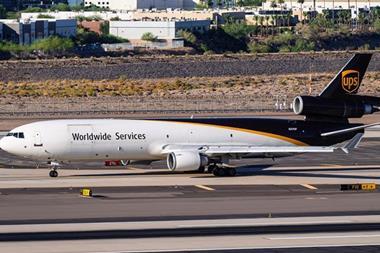
The Federal Aviation Administration (FAA) has issued a new Airworthiness Directive (AD) for certain Boeing 757 aircraft, including the 757PF (package freighter).
The AD document, issued on 9 December, has outlined measures required to address "the unsafe condition" of various parts of the aircraft.
"This AD was prompted by reports of precoolers that failed due to a wear-out condition, combined with latently failed overheat detection thermal switches," said the directive.
"This AD requires an inspection for heat damage on the engine strut structure, repetitive tests of the thermal switch temperature and ground wires, replacement of the precooler on Model 757-300 airplanes, and applicable on-condition actions. The FAA is issuing this AD to address the unsafe condition on these products."
As well as 757-200PF aircraft, the directive impacts 757-200, 757-300 and 757-200CB aircraft.
The AD is effective from 13 January 2026, said the FAA, which estimates that the AD affects 235 units of 757 aircraft registered in the US altogether.
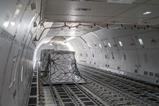
The 757-200PF is a production freighter that was specifically designed to handle high-volume, lower-density package cargo for express carriers.
Maximum revenue payload is approximately 87,700 lb or 39,800 kg, while range is up to around 3,150 nautical miles when fully loaded.