

Montevideo’s Carrasco International Airport is reaching outside its home market and utilising creative concepts beyond the core business
Montevideo’s Carrasco International Airport keeps punching above its weight, thanks to a combination of reach outside its home market and creative concepts beyond the core business.
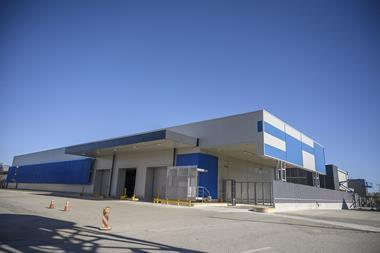
A new logistics facility is in the works at the airport’s old passenger terminal. Construction of a $10m, 5,000 sq ft e-commerce terminal on the site is set to kick off in the second half of this year with a view to operations starting there in the latter half of 2026.
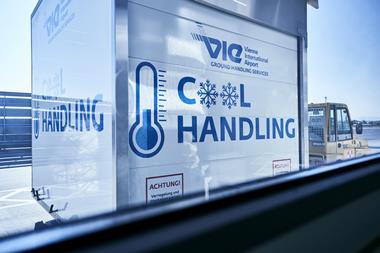
Latin America Cargo City (LACC), which manages the Uruguayan airport’s cargo business, plans to build a smart facility that will be LEED (Leadership in Energy and Environmental Design) certified. It will feature an automated vertical storage system, multi-range cold storage rooms and dedicated work spaces for exclusive operations.
E-commerce flows went through the roof last year in the wake of the arrival of Temu, which accelerated growth of this segment from previously 15% a year to 100%.
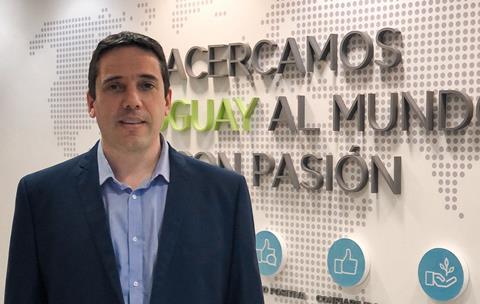
“It keeps growing,” says LACC general manager Bruno Guella. Temu is planning to expand its activities and other e-commerce firms are reportedly planning to start operations at Carrasco.
With a population of 3.5m, Uruguay has limited capacity to absorb a growing parcel tsunami. LACC is looking to turn the airport into a conduit for e-commerce flowing to neighbouring countries as well.
“There may be opportunities to use Uruguay as a platform for the region. We are preparing for that,” says Guella.
This strategy has worked well in the pharmaceutical industry, where leading international players, such as Glaxo Smith Kline and AstraZeneca, have chosen Montevideo as their hub for regional distribution.
These operations were the result of the airport’s strategic focus on the pharma sector. Led by Guella, the airport was one of the founding members of the Pharma.Aero initiative as well as an early adopter of CEIV and one of the first airports to establish a pharma corridor (with Brussels).
During the pandemic the airport played a central role in the distribution of the Covid vaccine throughout Uruguay. Under the ‘Gateway Access Point’ concept, vaccine shipments were stored, prepared and delivered from Carrasco directly to the vaccination centres around the country to shorten the supply chain and improve lead times.
This was planned and executed in close collaboration with government agencies and all other parties involved in the process.
Further pharma opportunities
Guella still sees plenty of runway for Carrasco’s pharma business to grow through close alignment with customers.
“We are participating in new developments with new clients,” he says. “There are appearing inside pharma different business models related to the value-added activities that can be performed here at the airport, and this is something we are discussing with our pharma clients. There are new types of operations and set-ups that may arise in the near future.”
At the same time LACC is looking to develop other verticals. Again, this is going to evolve in close collaboration with actors in those sectors, says Mariela Prospitti, LACC’s commercial senior manager, adding that this calls for a focus that goes beyond the relevant operations at the airport, based on a full understanding of clients’ objectives and requirements.
“We start to find opportunities not only in Montevideo but in the customer’s whole supply chain,” she says.
Guella adds that this is a key strategic plank going forward. “There is still room for improvement in terms of the added value that we can provide to our clients, even outside our premises,” he remarks.
“It’s not just focusing on an operation in the warehouse but trying to understand the whole end-to-end supply chain and add value to our client, more like a consultant.”

More oversight
Inevitably a more involved role in customers’ supply chains requires an augmented alignment for data flows. LACC is in the process of implementing a new warehouse management system, which is scheduled to go live before the end of the year.
This will segway into systems integration not only with customers but also with their service providers. “To add more value to the supply chain we will need to have more visibility,” says Guella.
LACC has been operating with a multimodal mindset for years. Large pharma customers that use it for regional distribution typically bring in most of their product by ocean carrier, which is then trucked from Montevideo’s port to the pharma set-up at the airport for onward transport by air or truck.
About 705 of the pharma shipments coming to the LACC for distribution to neighbouring countries arrive by container ship.
“In some of our pharma contracts my responsibility starts when the shipment arrives at the port,” says Guella. “We handle the information related to trucking under our control tower management team.”
It helps that the entire airport is a free trade zone. Cargo can be moved in bond from the port, and it can also be trucked in bond from the LACC to other airports. This opens up future possibilities at some smaller airports in Uruguay.
LACC parent Corporacion America Airports, which holds the concession for Carrasco airport and has a presence at 52 airports in six countries (Uruguay, Argentina, Brazil, Ecuador, Italy and Armenia), took over the operations at six local airports three years ago and pledged to invest $300m in these during the concession term.
While these do not have fully fledged cargo operations, LACC sees some potential there.
“We are working on creating a logistics platform at one airport,” says Guella, adding that one potential project for this is related to seafreight rather than air cargo. It could serve to bring in equipment to northern Uruguay rather than funnel it through Montevideo.
“We have to see these airports not so much as air cargo terminals but as logistics platforms for other types of cargo,” he says.
Thinking outside the box
LACC management is open to undertakings that are outside its core handling and logistics focus. One possible avenue there is leveraging real estate at Carrasco. Being the only provider of logistics services at the airport, management sees scope for providing space for third parties to perform certain activities on their own or together with LACC. In some cases providing office space to companies that could benefit from the airport’s FTZ status could be viable, says Prospitti.
“Right now we are analysing a development around having companies come and develop their activities here,” she remarks. “This will be another vertical of the strategy that we are building.”
She adds that this could be any company, but LACC’s focus is on firms that have regional distribution.
Guella sees two types of candidates looking for possibilities aligned with distribution – service providers like warehousing firms or cargo owners that look to manage distribution themselves. “The market will tell us in which segment we have the best opportunities,” he says.
Some projects will take time to come near fruition. A few years ago the airport launched a concept for the distribution of medical cannabis in South America after the national government had legalised the use of the drug, but this has made scant progress so far, as regulations in most countries are still not ready.
For the time being, LACC is not working on expanding this avenue as the necessary effort can be spent to better effect on other projects, Guella says.
There are plenty of other avenues to explore in the meantime.