


Singapore gateway reports 4.5% year-on-year increase to 2.1m tonnes, supported by tariff-driven pre-shipments and new freighter services

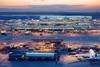
Photo: Changi Airport
Singapore’s Changi Airport saw cargo volumes improve last year on the back of front loading and the return of freighter services.
The Asian airport, a major transhipment hub, saw air cargo demand in 2025 increase by 4.5% year on year to 2.1m tonnes.
The airport said that the year was one of the “best cargo performances” in its history.
Explaining the reasons behind the increase, Changi said growth was seen across all cargo flows – exports, imports and transhipments.
”This can be attributed to the front-loading of activities in the first three quarters of the year, and strong global semiconductor demand on the back of AI, electric vehicles and cleantech growth,” Changi said.
Last year saw shippers try to get ahead of the implementation of US tariffs by quickly flying goods to market ahead of the increases, rather than use ocean shipping with its longer transit times.
The airport also benefited from the return and addition of freighter services.
New freighter airline JD Airlines began thrice-weekly Shenzhen–Singapore freighter services.
Turkish Cargo reinstated its freighter operations at Changi Airport with a weekly Istanbul–Ho Chi Minh City–Singapore freighter service, further boosting connections to China, Europe and Southeast Asia.
Additionally, FedEx Express expanded its network with the launch of non-stop freighter services to Anchorage, providing dedicated capacity on the Singapore–US lane.
Changi’s top five air cargo markets were China, the US, Australia, Hong Kong and India, with the top three growth markets being China, the US and Taiwan.
The percentage growth in cargo demand was ahead of rival Hong Kong, which saw its volumes increase by 2.7% to 5.1m tonnes.