

Integrator says navigating regulatory diversity remains key challenge but regional strength lies in leveraging unique market advantages

Southeast Asia will remain an important region for FedEx in 2026, but recognising and understanding the different air cargo markets in individual countries is crucial to business growth, stressed the integrator.
Steady production shifts from China and growing air cargo supply chains have helped meet and further fuel demand out of Southeast Asia, but different air cargo business approaches need to be used for different countries, stressed Bianca Wong, vice president, operations, FedEx Southeast Asia.
Speaking exclusively to Air Cargo News, Wong said: “In Southeast Asia, the biggest challenge is navigating the region’s diversity, with each market having its own regulations, infrastructure, and customer needs.
“We work closely with authorities across the region to stay ahead of regulatory changes and with our customers to provide solutions that simplify these complexities, leveraging data, digital platforms, and trade technology to make cross-border shipping easier and more efficient.”
However, she added that this diversity is also beneficial to businesses and shippers, which FedEx supports with air cargo capacity on key routes, backed by technology and data to help it respond to trade volatility.
“At the same time, this diversity is a source of strength and opportunity. Businesses in Southeast Asia can leverage the unique advantages of each market, tapping into local resources, talent, and trade agreements to expand their reach.
“By working together across Southeast Asia, companies can grow collectively, creating a portfolio of solutions that support both regional and global trade. FedEx helps make this possible by efficiently connecting these markets, enabling businesses to scale, build resilient supply chains, and maximise the region’s potential while using technology and data to navigate complexity.”
Wong noted that as more businesses reconfigure their supply chains to include Southeast Asia, inbound and outbound flows have become more balanced.
“Amidst the supply chain review, Southeast Asia is set to remain a critical growth engine in global trade, driven by booming e-commerce, growing diversification into the region, and rising intra-regional trade," she said.
“The region is becoming a busier and more balanced hub, with both inbound and outbound flows growing as it expands as a manufacturing and trading base. Its network of intra-regional and inter-regional free trade agreements (FTAs) further enhances competitiveness, enabling smoother and more cost-effective cross-border trade.
"These trends reinforce Southeast Asia’s role as a pivotal hub in the FedEx global network and a prime location for businesses looking to strengthen supply chain resilience.”
Peak preparation
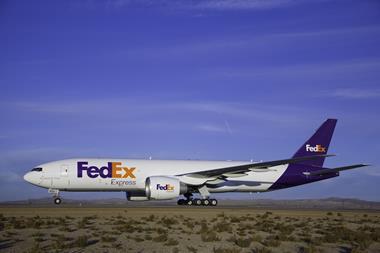
FedEx has bolstered its Southeast Asia network for the fourth-quarter peak, driven by e-commerce and holiday demand across the region.
One focus point has been Asia-Europe trade. “We’re seeing sustained momentum on Asia-Europe trade lanes,” said Wong.
“According to the International Air Transport Association (IATA), Asia-Europe trade lanes have seen 31 consecutive months of growth, and we expect this momentum to continue into 2026.
“Our 2025 FedEx Asia-Europe Trade Report, which surveyed over 850 SMEs across 12 APAC markets and more than 1,200 SMEs in nine European markets, found that 76% of businesses in our region recorded higher export volumes to Europe in the past year, driven by strong consumer demand, strategic growth opportunities, and favourable trade agreements.
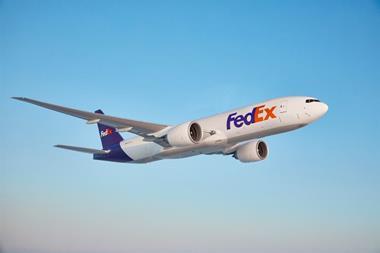
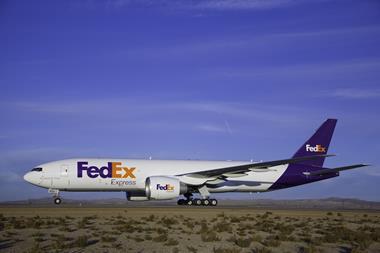
“To support this, we have made strategic investments in our network, including adding multiple weekly flights between APAC and Europe.”
In October, FedEx added five extra flights per week from Asia Pacific to its European hub at Paris CDG Airport in response to growing demand on the lane.
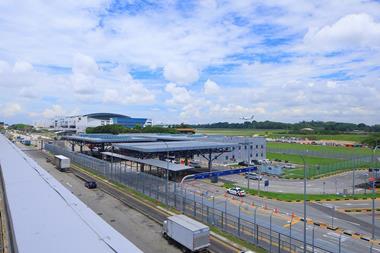
Three of the additional flights operate to Paris from FedEx’s Guangzhou Baiyun International (CAN) base, while the other two operate from Changi (SIN) in Singapore.
FedEx has also strengthened its intra-Asia network. In October, the integrator added a new weekly flight connecting Incheon, Hanoi and Guangzhou.
And in November, FedEx introduced nonstop cargo flights connecting CAN with Penang International Airport (PEN), as well as five weekly flights between CAN and Bangkok Suvarnabhumi Airport (BKK).
“To meet rising demand, we’ve strengthened our regional network this quarter with new flights connecting Asia Pacific and Europe and expanded intra-Asia connectivity with additional flights between Guangzhou, Bangkok, and Penang,” explained Wong.
“With the help of advanced tracking and routing systems, these enhancements give Southeast Asian markets better connectivity, increased capacity, and faster, more reliable access to global trade lanes," added Wong. "This approach reflects our broader commitment: enabling businesses to navigate dynamic trade flows and unlock growth opportunities through smarter, more resilient supply chains – especially during peak periods.”
As well as adding flights between Guangzhou, Bangkok, and Penang in the fourth quarter, in the second half of this year, FedEx added an additional flight out of Hanoi and its first direct flight between Incheon, South Korea and Taiwan.