

The US integrator has added an Incheon-Hanoi-Guangzhou route as the Asia Pacific air cargo market experiences strong growth, driven by peak season demand
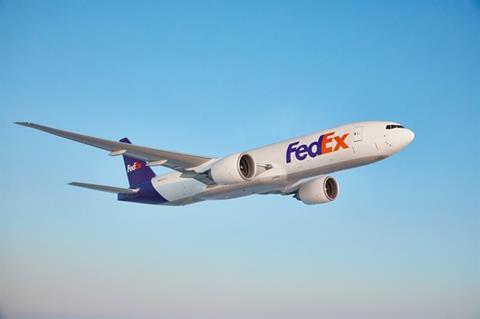
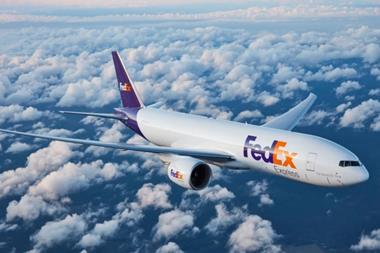
FedEx has expanded its intra-Asia network with a new weekly flight connecting Incheon, Hanoi and Guangzhou to help meet strong demand across the continent.
The US airline has introduced a weekly flight operating every Monday, connecting Incheon International Airport (ICN) in South Korea with Noi Bai International Airport (HAN) in Hanoi, Vietnam, before continuing to the FedEx Asia Pacific hub in Guangzhou, China.
"This new route significantly enhances logistics efficiency by reducing transit times by one day for shipments from Northern Vietnam to Asia and Europe across all FedEx services," said FedEx. "The improved reliability and increased capacity will benefit customers tapping the Asia and Europe markets, supporting their growing trade needs."
In July, FedEx also launched its first direct flight between South Korea and Taiwan to support air cargo demand for electronics, semiconductors, and e-commerce.
The route, which operates seven days a week, connects South Korea via the FedEx Incheon Gateway at ICN with Taiwan via the FedEx Taipei Gateway at Taoyuan International Airport (TPE).
“Asia’s trade landscape is evolving rapidly,” said Kawal Preet, president of FedEx Asia Pacific. “We’re responding by strategically investing in our network to create stronger connections for businesses within the region and unlocking new pathways for growth, driven by the need to adapt to diversifying supply chains, rising regional economies, and an e-commerce landscape being reset by changing customer behaviors and market dynamics.”
Both the recently launched routes offering time-definite and day-definite services enhance supply chain efficiency for manufacturers and exporters across major trade lanes, including intra-Asia, Asia-Europe, and Transpacific, noted FedEx.
The Asia Pacific air cargo market is experiencing strong growth momentum driven by peak holiday season demand and shifting trade flows.
Intra-Asia trade accounted for nearly 60% of Asia’s total exports, and ASEAN has emerged as China’s largest trading partner, with bilateral trade reaching over $962bn in 2024.