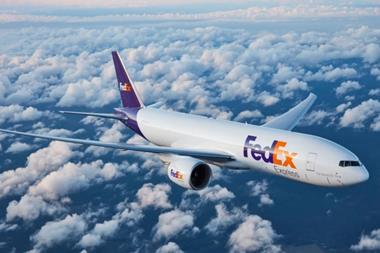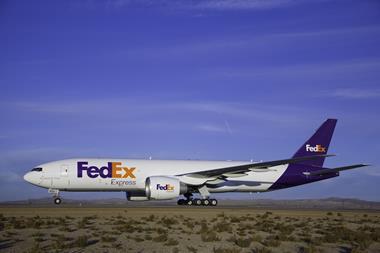





FedEx has reduced transpacific freighter capacity by 25% compared with last year as US tariffs on e-commerce shipments from China impact demand levels
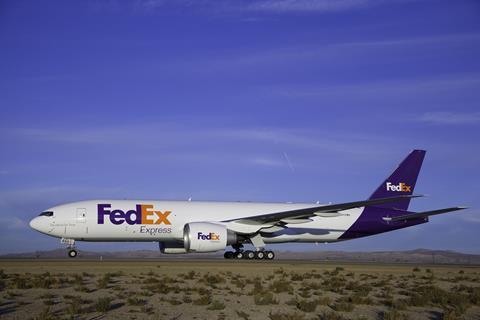
FedEx has shifted freighter capacity away from the transpacific trade lane in favour of Asia-Europe as tariffs on e-commerce shipments have taken their toll on demand levels to the US.
Speaking following the announcement of the express giant’s fiscal first-quarter results, president and chief executive Raj Subramaniam said the express firm had reduced its own-controlled transpacific capacity by 25% compared with last year and by 10% compared with the previous quarter.
The company had reduced third-party capacity provision by similar percentages, he said.
In May, the US began charging duties for the import of low-value e-commerce goods from China, which had previously been tariff-free under the de minimis exemption. Shipments from China are also facing a 30% tariff.
In August, the White House removed the exemption on a global basis.
“We shifted capacity to capture profitable revenue in the Asia-to-Europe lane,” Subramaniam explained. ”With the full removal of the de minimis exemption in the US late last month, we have been working closely with our customers, helping them maintain effective and efficient access to the US market.”
Chief customer officer Brie Carere added: ”International export volumes declined, particularly on the China to US lane.
“Knowing our strongest international lane would be under pressure. We pivoted the commercial team, and they have done a tremendous job capturing demand out of Southeast Asia and Europe.”
This provided a partial offset against the headwinds to demand on the China-to-US export lane.
She added that the company is optimistic about the peak season with a mid to high year-on-year percentage improvement in total volumes expected.
This comes despite some suggesting that strong demand levels earlier in the year were due to companies shipping peak volumes early.
“We saw strong volumes in July, but I don’t necessarily see that as a pull forward,” Carere said.
Despite the challenges facing FedEx on the transpacific trade lane and the expiration of its contract with the US Postal Service, the company’s first-quarter results were seen positively by markets as shares rose following the announcement.
The company saw revenues rise by 3% to $22.2bn, operating income was up 10% to $1.2bn and net income improved by 4% to $824m.
Revenue improvements were driven by US domestic package performance. The improved profit performance came on the back of the company’s various cost-cutting schemes, which it reckoned saved around $200m during the period, and increased network flexibility.