

Logistics provider handled wildlife conservation shipments and motorsport memorabilia across multiple continents during the year
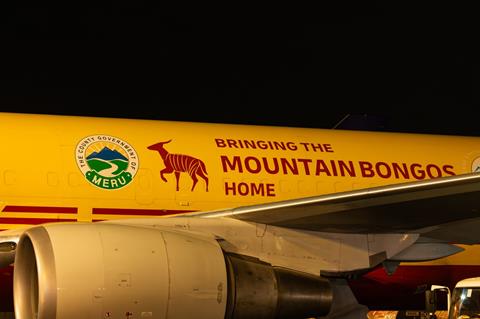
While DHL is known for transporting parcels and pallets across the world, the express firm’s team are also involved in moving some unexpected shipments. In 2025, these have ranged from antelopes, a rescued baboon and 37 tons of art to a racing car helmet signed by Formula 1 legend Michael Schumacher.
One such example is DHL’s operation to transport 17 mountain bongo antelopes from a conservation centre in Loxahatchee, Florida, to a wildlife sanctuary on the slopes of Mount Kenya, Africa’s second-highest peak. These animals are descendants of mountain bongos relocated from Kenya in the 1970s.
After decades of poaching, habitat loss, and forest degradation, the species is critically endangered, with fewer than 100 surviving in the wild.
To ensure the Florida bongos’ safety and comfort on their journey, DHL provided a dedicated flight equipped with custom-built crates supplied by a wildlife protection organisation.
"The animals received continuous care from a veterinarian and two bongo specialists,” DHL said. "Their new sanctuary offers a secure environment where they can breed and thrive. Their offspring will one day return to the wild, reclaiming Mount Kenya’s forests as their natural home.”
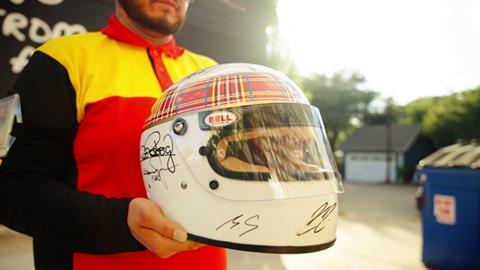
Another mission saw DHL transport a racing driver’s helmet from Switzerland to Brazil across several continents. The helmet was signed by all 20 living Formula 1 world champions, becoming a unique piece of motorsport history.
DHL transported the helmet from Switzerland to the homes of multiple champions so they could add their signatures. The route included stops in Ibiza in Spain, London in the UK, and Brasília in Brazil.
"One signature was particularly moving: Michael Schumacher’s, the seven-time world champion who has withdrawn from public life since his severe skiing accident in 2013. His wife, Corinna, helped guide his hand to write his initials, MS, on the helmet – a gesture that resonated deeply with fans around the world,” DHL said.
A replica of the helmet was later featured as a raffle prize to help fund the “Race Against Dementia” charity founded by three-time Formula 1 champion Jackie Stewart.
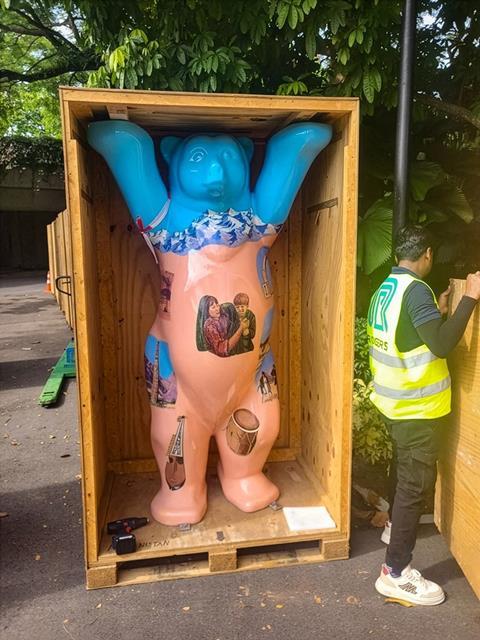
Elsewhere, in June 2025, 151 life-sized bear sculptures embarked on a journey of about 10,000 km from Wustermark near Berlin to Singapore. Crafted from weather-resistant fibreglass, each sculpture stands about two metres tall.
Weighing a total of 37 tons, the shipment was packed into eight sea containers, loaded by crane onto trucks, and transported to the Port of Hamburg.
From there, the bears began their sea voyage to Singapore, where they were displayed for two months, continuing their mission of promoting international understanding.
Known as the United Buddy Bears, the art project was launched in Berlin in 2002 to spread a message of peace and tolerance. Every bear is painted by an artist from a different country, symbolising that nation’s culture and identity.
Then, in November, DHL flew a young male baboon from the Middle East to East Africa. Saadoon was transported from Bahrain to Djibouti, East Africa, after he was found abandoned and in critical condition in Bahrain in 2024 at just three months old.
Saadoon was a victim of illegal wildlife trade and after more than a year of intensive care by an animal welfare organisation, he needed an environment suited to his species.
DHL flew Saadoon from Muharraq in Bahrain to Djibouti airport, where he was transferred to a specialised refuge near Djibouti City.
Custom boxes, veterinary oversight, and an accompanying animal welfare representative minimised stress during the flight.
"Now living in a sanctuary tailored to his needs, Saadoon shares a new home with a female baboon, essential for social bonding among these intelligent primates," DHL said.
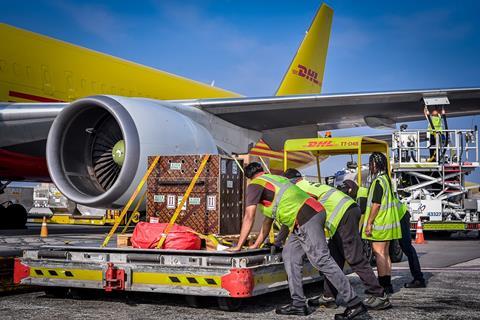
Also in November, DHL delivered the iconic trophy for the CONMEBOL Libertadores Final, South America’s most prestigious club football showdown.
The journey began at CONMEBOL’s headquarters in Luque, Paraguay, and ended in Lima, Peru, where the decisive match took place on 29 November.
Roughly one metre in height, the trophy travelled in a custom metallic case with a special security lock and was handled exclusively with gloves to preserve its flawless shine.
The CONMEBOL Libertadores brings together the best clubs from across South America, each chasing the ultimate prize and the privilege to represent the continent at the FIFA Club World Cup.
This year, Flamengo of Rio de Janeiro claimed the trophy after an all-Brazilian clash against Palmeiras of São Paulo.