


Air cargo has posted year-on-year gains of 5% despite economic headwinds, with operators adapting capacity deployment strategies to navigate shifting trade patterns
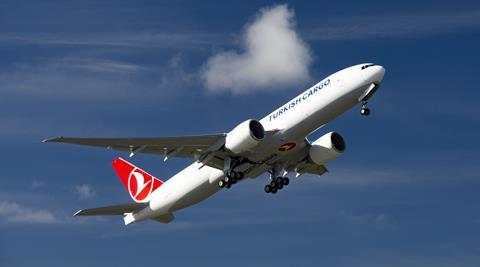
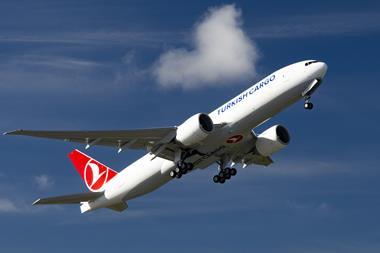
Turkish Airlines took delivery of its ninth B777 freighter in mid-October and has three more to join its fleet in 2026.
As often in this industry, market conditions at the time when the order was placed in 2024 were buoyant but look rather different on the day of delivery. With key economic indicators for the world’s major economies in contraction, now is hardly an auspicious time to add capacity to the market.
That said, the air cargo sector has stubbornly defied gravity in recent months. Despite the end of the de minimis exemption for e-commerce imports into the US and dire warnings of a slowing global economy, the industry saw year-on-year gains of 5% in July and August.
According to Xeneta, it is on course to grow 3-4% for the full year over 2024, which had been a banner year.
The picture looks decidedly less promising in the transpacific arena, where a sharp drop in Chinese exports to the US has decimated traffic, but other sectors have shown gains, including intra-Asia routes, China-Europe and transatlantic.
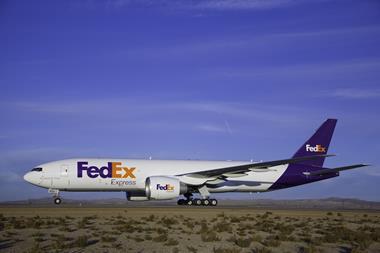
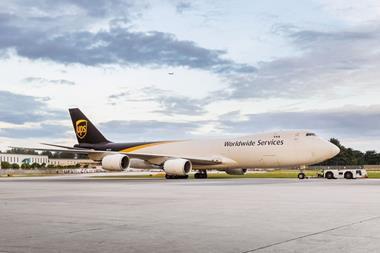
Unfettered by passenger schedules, freighters have migrated to stronger sectors. FedEx moved 25% of its transpacific capacity to other lanes, UPS ramped up flights between its Asian hub in Shenzhen and Sydney and doubled capacity on the Shenzhen-Hanoi route by fielding B747F aircraft on the sector.
Airports that could only dream of international freighter operations have popped up on the map. Maastricht Aachen Airport rolled out the welcome mat for Avianca A330Fs in early October, following new operations launched by Turkish Airlines and My Freighter.
Bournemouth opened new cargo facilities and freighter stands in October, buoyed by the activities of European Cargo, which picked the airport for its base.
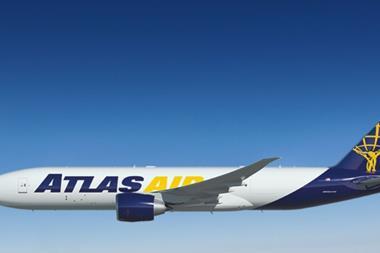
The uncertainty surrounding tariffs may have also played a role in prompting some large forwarders to strengthen their grip on dedicated capacity. DSV recently signed an ACMI deal for a 777 freighter with Atlas Air.
Of course, the trade war unleashed by Washington is not a zero-sum game. The Organisation for Economic Cooperation and Development recently warned that the full impact of the tariffs is yet to manifest itself.
Washington will move to close loopholes for goods originating in China, and European governments are feeling increasing pressure from domestic industries to shield them from a flood of subsidised imports from China. Tariffs will stifle consumer demand and impede trade flows.
The headwinds will intensify.