

Express services provider enhances regional connectivity with five-times-weekly Shenzhen-Sydney service and doubled Vietnam-China cargo capacity, as intra-Asia trade momentum drives network expansion despite global trade uncertainties.
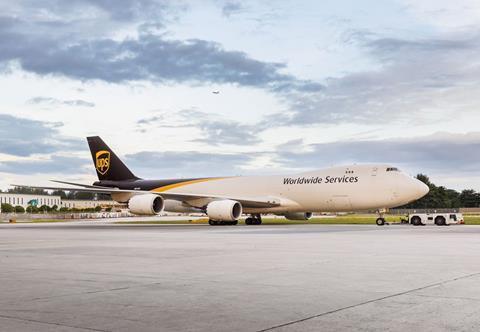
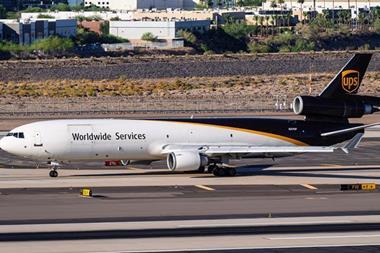
Express services giant UPS has reinforced its intra-Asia air network to meet what it says is growing demand for airfreight capacity across the continent.
In one change, it has increased its frequency of service on the Shenzhen–Sydney route to five times a week.
UPS now offers more than four times as much capacity on the flight linking its intra-Asia Chinese hub of Shenzhen with Sydney Kingsford Smith Airport.
Delivery time from the Chinese mainland, the Hong Kong Special Administrative Region (SAR), Japan, Malaysia, Philippines, South Korea, Thailand and Vietnam to Australia is also now a day faster at two business days, with next-business-day delivery available for Friday pick-ups.
Plus, exports to major Asia markets and imports from Europe will now arrive one day earlier.
According to UPS, the increased capacity on the route will help Australian businesses to reach new markets with “speed and confidence”.
It also means faster access to critical goods such as pharmaceuticals, medical devices and specialised components for machinery and automobiles.
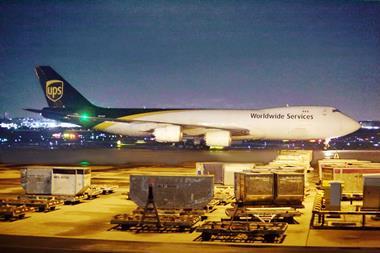
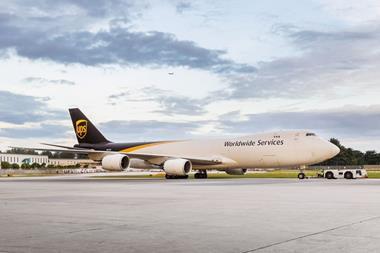
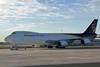
In a second change, UPS has enhanced its Hanoi–Shenzhen connection by deploying larger Boeing 747 freighters on the route, doubling weekly cargo capacity to 570 tons.
The upgrade, UPS said, supports growing demand for cargo moving from Vietnam to the Chinese mainland, the Hong Kong SAR, Japan, Malaysia and Thailand.
UPS customers in Vietnam now benefit from next-business-day deliveries to the Chinese mainland and the Hong Kong SAR.
These changes are a response to intra-Asia trade continuing to grow, UPS explained, the market fuelled by strong regional demand and high-growth sectors such as healthcare, technology, industrial manufacturing and the automotive sector.
Wilfredo Ramos, president of UPS Asia Pacific, remarked: “We continue to see strong momentum across Asia Pacific with intra-Asia trade staying resilient, even as businesses navigate an evolving global trade landscape.
“UPS is helping its customers strengthen their supply chains through greater flexibility, faster delivery and deeper regional connectivity.
“Our network is designed to give our customers the agility, reliability and assurance they need to grow confidently in a dynamic region.”
These latest improvements follow other recent UPS investments in the Asia Pacific region.
In Malaysia and Japan, UPS enhanced delivery capabilities through a new facility in Senai, Johor and expanded services from the Kyushu region to help businesses reach international markets.
On the up
According to the recently published IATA World Air Transport Statistics (WATS) report, UPS is the world’s third-biggest air cargo carrier as measured by cargo tonne-km (CTK) flown.
UPS achieved growth of 6% to 15.1bn CTKs in the figures for 2024, retaining its third-place position from 2023 when it had slipped down one spot.
And in its figures for performance in the second quarter of this year, UPS said that it had been challenged by tariffs and changing consumer habits, but that its air cargo business helped improve its results.
The express company announced second-quarter 2025 revenues of $21.1bn, down 2.7%, and operating profit of $1.7bn, down 6.3%.
Carol Tomé, UPS chief executive, commented: “Our second quarter results reflect both the complexity of the landscape and the strength of our execution.
“We are making meaningful progress on our strategic initiatives, and we’re confident these actions are positioning the company for stronger long-term financial performance and enhanced competitive advantage.”