



The UK has the potential to lead on commercial cargo drone operations, but the current pace of legislation, regulation and support to facilitate further development is a concern.
While the UK has already demonstrated robust drone capability to support the middle-mile logistics sector, companies need support from the government to further develop operating frameworks.
The way we move goods is changing. Autonomous aircraft are no longer experimental; they are delivering life-saving supplies to some of the world’s most remote and challenging locations. The next step is scaling this technology safely and effectively to meet the growing demands of defence, humanitarian and commercial logistics in the middle-mile.
The middle-mile logistics sector, covering routes between 50 and 500 kilometres, is worth £213bn globally and growing by around 5-6% each year. The UK has an opportunity to lead this transformation but without urgent investment and clear policy action, that window will close. And it will close fast.
Middle-mile logistics is the backbone of supply chains, bridging the critical gap between local delivery and long-haul transport. Efficiency here directly influences the cost, speed and resilience of entire logistics networks.
In defence and civilian operations alike, trust in autonomous aircraft systems is not built on what the technology can do in theory, it comes from real-world performance so that it is proven to be safe, reliable and at a lower cost than crewed alternatives.
This is especially true in the middle-mile logistics space. These aircraft must cross complex airspace, operate alongside conventional aviation and deliver useful payloads safely and reliably at scale.
This requires more than just robust aircraft design. It demands integration with air traffic management, stringent safety protocols, and operational frameworks that accommodate autonomous systems without disrupting existing aviation flows.
Proven drone operations
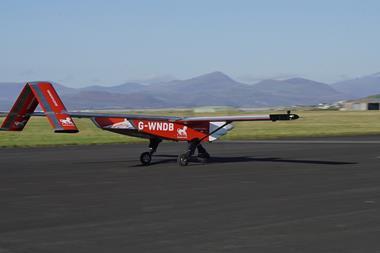
Crucially, Britain already has autonomous aircraft capability. A small number of sovereign UK operators, like Windracers, have proven drone cargo delivery in active environments, from remote communities in the Orkney Islands to supporting resupply efforts in Ukraine.
These are not hypothetical scenarios, but real logistics missions in remote and extreme conditions. It is working and, more importantly, it can scale with the right support.
So, what I’m talking about is not potential, it is already being delivered today by UK hands, with UK technology. I firmly believe air cargo drone operations for the middle-mile should now sit at the centre of how we shape drone policy and regulation going forward.
I applaud the Civil Aviation Authority for its progress in this area, and, building upon that progress, what is needed is a system that moves faster for operators with proven experience.
We need the ability to operate for longer periods of time to test and prove commercial models and faster approvals and regulations that evolve in step with the technology.
The current pace risks bottlenecking innovation. I invite regulators and government to partner with experienced operators to create adaptive frameworks, enabling continuous operational trials rather than one-off test events. This will accelerate learning and safely unlock commercial potential.
With this support, the UK can create an airspace that backs UK businesses to create and grow a new segment of air cargo and the overall logistics sector. Across Europe and the Americas, nations are embedding autonomous logistics and transportation into their defence and national infrastructures.
The UK is in danger of being left behind in autonomous air logistics not because we lack the technology, but because we are committing to back it in practice.
The benefit of backing such companies is clear - it develops our own talent, grows our own companies, and secures our own supply chains before looking abroad.
Without doing so, I believe that this will not just hurt our ability to operate, it will cost us the chance to build UK economic strength, create high-skilled jobs and attract global talent to the UK tech sector.
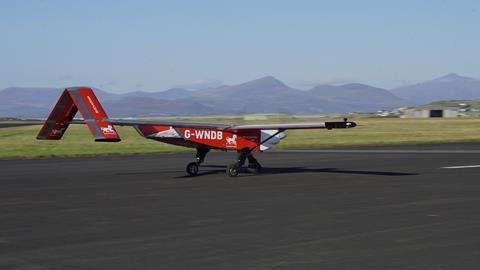
Currently, the UK is the home to what I believe is the world’s most accomplished autonomous air cargo platforms for the middle-mile, but other countries are closing in fast.
Backed by major investment from the likes of the EU Commission and their own governments, they are accelerating while we hesitate. Without urgent action, we will be overtaken.
International competitors are not only innovating with cutting-edge technology but also securing regulatory approvals and government partnerships that fast-track deployment. The UK must match or exceed this ambition to maintain its competitive edge.
The UK has the talent, the technology and the operational proof. As with anything, global leadership will not be handed to us.
The race has already started. The question is not whether drones will succeed, the question is whether the UK is willing to back its own.