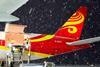




Photo: Cathay Pacific
Cathay Cargo delivered a “resilient” performance in the first half of the year, despite the impact of US tariffs and the ending of the de minimis exemption for China and Hong Kong.
Figures released today show that in the first half of the year, Cathay Cargo’s revenues increased by 2.2% year on year to HK$11.1bn, while cargo traffic in revenue freight tonne kilometres (RFTK) terms increased by 5.9% and total tonnage was up 11.4% to 801,000 tonnes.
The cargo load factor decreased 1.3 percentage points to 58.6% on the back of an 8.1% increase in capacity, while yield decreased by 3.4% to HK$2.59.
”Despite the uncertainties caused by tariffs and changes to the de minimis exemption, our cargo business demonstrated resilience,” Cathay Pacific chair Patrick Healy.
”We have been able to leverage our global network and redeploy capacity to take advantage of areas where the markets are still strong, helping us to continue contributing to the cargo tonnage throughput at Hong Kong International Airport (HKIA).”
The airline group said that cargo demand from Hong Kong and the rest of the Greater Bay Area into the US was negatively impacted by the increased tariffs imposed in early April and the removal of the de minimis exemption in early May, although there was some recovery following the temporary reduction in tariffs from mid-May.
”While e-commerce demand declined during this period, we were able to offset the shortfall by capturing additional cargo volumes to optimise flight capacity.”
Meanwhile, the Southeast Asia region had a strong start to the year, driven by demand to the Americas and a production rush ahead of the introduction of tariff changes.
General cargo, including high-tech electronics and garments, performed well on regional routes, with Vietnam, Thailand and Indonesia continuing to drive perishables traffic into Hong Kong, the Chinese Mainland and the US, Cathay explained.
To cater for the extra demand, the carrier introduced an additional weekly freighter service to Hanoi from May, resulting in a total of eight freighter flights per week to the city.
Meanwhile, demand from the Chinese mainland market “remained steady” despite a temporary contraction in cargo demand from the US between April and mid-May due to increased tariffs and the removal of the de minimis exemption.
”We saw a rebound in demand following the temporary reduction in tariffs in May,” the carrier added. “Overall, demand for general cargo from the Chinese Mainland to other markets remained robust, with growth primarily driven by high-tech electronics on major trade lanes to markets such as India and the Southwest Pacific.”
Looking ahead, Healy said that uncertainty in the market environment remains.
”We will stay vigilant and agile, while continuing to serve demand where it arises,” he said. ”In parallel, we will continue to strengthen our special solutions, digital capabilities and sustainability leadership to position us for future growth.”