
Carrier aims to operate 21 Boeing 777Fs by year-end as it scales network reach and pursues digital transformation across operations

Photo: Emirates SkyCargo
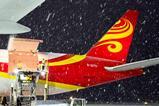
Emirates SkyCargo has outlined its ambitions for the coming 12 months with the addition of more freighters at the centre of its plans.
The Emirates cargo division said that over the coming year, it hopes to add a total of 10 Boeing 777 freighters to expand cargo capacity, enhance its network and further develop flexibility and schedule reliability.
The airline’s freighter fleet currently stands at 11 Boeing 777Fs and five wet-leased Boeing 747s. By the end of the year, it plans to operate at least 21 777 freighters.
The airline currently has outstanding orders for 10 production 777 freighters, while it has also placed orders for 10 777 passenger-to-freighter conversions from Israel Aerospace Industries (IAI).
The first of these aircraft began the conversion process last year, the airline said.
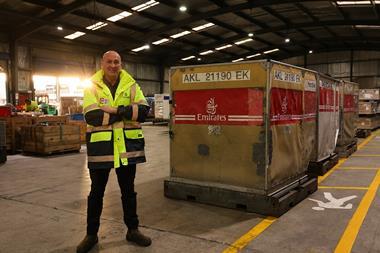
Badr Abbas, divisional senior vice president at Emirates SkyCargo, recently told Air Cargo News that Boeing was "on track when it comes to the deliveries".
In a press release highlighting the airline's development plans, he said: "In 2025, we built the runway for what comes next. We strengthened the core pillars of our business by expanding our network and innovating with our product portfolio and operations to deliver what our customers need today – and tomorrow.
"2026 is set to be a pivotal year for our fleet expansion, with the expected delivery of up to 10 Boeing 777Fs by December, fuelling our next era of growth.
"This influx of capacity unlocks opportunities for network and scheduling expansions, offer more flexibility to scale our solutions and enable us to deliver even greater value across our global network.”
Emirates SkyCargo took delivery of three 777 freighters last year, allowing the airline to retire older aircraft and reinforcing its commitment to operating one of the youngest cargo fleets in the industry.
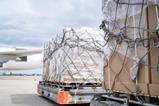
The expanding fleet supported network growth. During 2025, Emirates SkyCargo launched freighter services to eight new destinations: Copenhagen, Narita, Bangkok, Mumbai, Beirut, Conakry, Phnom Penh and Hanoi.
High-demand markets such as Guangzhou, Shanghai and Johannesburg also benefited from increased frequencies, while Hanoi was rapidly scaled up to four weekly flights.
Elsewhere, the company continued to strengthen its operations in 2025, investing in infrastructure, technology and new products while preparing for its future facility at Al Maktoum International Airport.
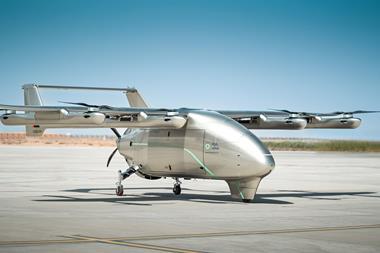
The airline upgraded its on-road fleet with 40 Euro 6 trucks and is set to introduce five hydrogen-powered vehicles by early 2026. It also partnered with LODD Autonomous to explore the use of VTOL aircraft for first- and last-mile cargo delivery.
Digital transformation continued with nearly 80% of shipments booked digitally by December 2025. Growth was driven by eSkyCargo, third-party marketplaces and direct API integrations.
Emirates SkyCargo also became the first carrier in the Middle East to adopt PayCargo, enabling instant digital payments.
Product innovation continued across multiple verticals. The airline launched Emirates Courier Express, a door-to-door delivery solution now operating in markets including Australia and Germany, with further expansion planned in 2026. In Aerospace and Engineering, Emirates SkyCargo recorded a 100% increase in aircraft engine movements and transported Arab Satellite 813 to Shanghai.
The Fresh vertical grew by 10% year on year to 25,700 tonnes, while volumes on Vital, the airline’s pharmaceutical service, rose by 54%. Demand for Secure also increased by 30%, driven by electronics shipments from Vietnam and India.