

Carrier remains confident in Boeing 777F delivery timeline while first 777 passenger-to-freighter conversions from IAI move closer to completion

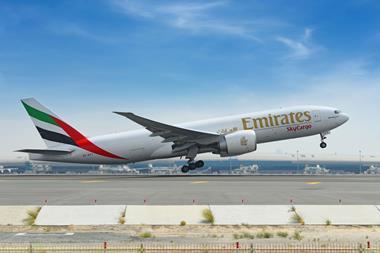
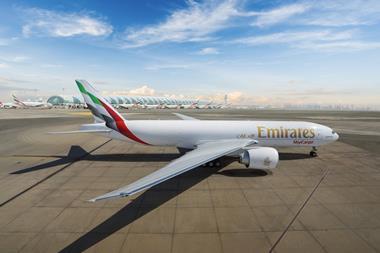
Emirates SkyCargo is confident its orders for 21 Boeing 777 production freighters and 10 777 freighter conversions are on track and will enable it to meet future widebody capacity demand.
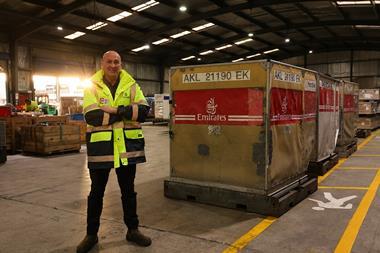
Badr Abbas, divisional senior vice president at Emirates SkyCargo, informs Air Cargo News (ACN) that the airline expects steady deliveries of 777 newbuild freighters to reach its goal of 21 aircraft of this type by December 2026.
Although recent supply chain challenges have posed a challenge for aircraft deliveries, Emirates SkyCargo has continued to take delivery of its 777F newbuilds this year. The most recent aircraft from Boeing's factory was delivered in August and another 10 are yet to be delivered.
“The freighters joining the fleet will bring us to 21 freighters by December 2026, which is huge capacity growth," says Abbas. "This will help us grow the tonnages, grow the revenues and serve more trade lanes.
“We’ve started receiving our 777 freighters, and we’re in regular contact with Boeing to understand the status, so I think we’re on track when it comes to the deliveries.”
In October 2024, Emirates placed a firm order for five 777Fs, on top of its existing order for nine of the model. The airline also signed a multi-year lease extension with Dubai Aerospace Enterprise for four Boeing 777Fs in its existing fleet.
Of the overall Emirates 777F fleet, one leased 777F was removed this year. Emirates SkyCargo told ACN earlier this year that as it receives new freighters, it would remove other aircraft from its fleet.
The airline is also now one step closer to receiving its first 777 passenger to freighter conversion from Israel Aerospace Industries (IAI).
Emirates SkyCargo first announced plans to convert four of its 777-300ERSF passenger planes to freighters with IAI in 2021 and later extended this to 10 units.
Conversions were hampered by delays in securing the Supplemental Type Certificate (STC) for the conversion, but IAI said in September it had finally received an STC certificate from both the US Federal Aviation Administration (FAA) and the Civil Aviation Authority of Israel (CAAI).
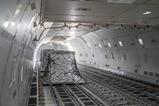
“Once converted, these freighters will offer operational advantages and large Flexible Capacity, which are ideal for our high-volume lanes and transporting e-commerce shipments," comments Abbas.
747Fs remain
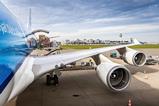
Emirates also has six wet-leased 747Fs that it currently plans to keep in its fleet. Abbas says that the aircraft play a vital role in providing the freighter capacity needed to help meet air cargo demand at speed.
“These aircraft are complementing our own dedicated fleet. They help us unlock immediate demand and they will be in our fleet for some time," explains Abbas.
“We keep on evaluating whether to continue leasing them or not and that decision will be made at the time of renewal. But at the moment they will remain in our fleet because we need the capacity.”
Further, the airline may invest in the new generation Airbus A350F or Boeing 777-8F in the future.
“We are exploring all the options at the moment, and we are doing an assessment of different aircraft types to see what is suitable for our long-term growth," says Abbas.
But he adds: "We are, at the moment, investing in the Boeing 777Fs. Those are coming.”