


Photo: Etihad Cargo
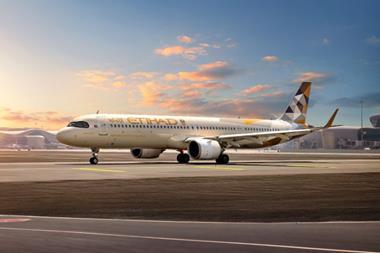
Etihad Cargo saw its revenues increase in the first half of the year, while cargo volumes also improved but by a lower amount.
The Abu Dhabi-headquartered cargo business reported a 9% increase in revenues to $551m, while cargo volumes were up by 1% to 322,000 tonnes.
Stanislas Brun, chief cargo officer, Etihad Airways, said: “These results demonstrate that Etihad Cargo is delivering sustainable performance by focusing on premium products, agile network planning and close partnerships with our customers. Adaptability and customer-centricity remain central to our success.”
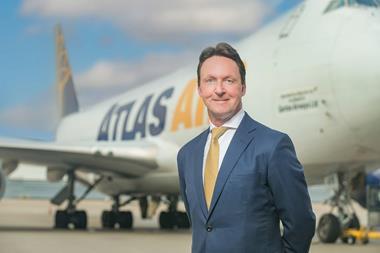
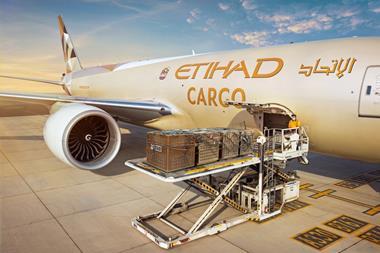
During the first half, the carrier also expanded its cargo capacity by 8% year on year with the addition of a sixth Boeing 777 freighter operated by Atlas Air as well as extra bellyhold space.
Etihad's overall operating fleet increased by 13 to 106 aircraft by the end of the first half.
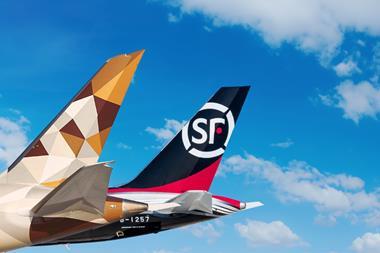
The airline also deepened its strategic partnership with China’s SF Airlines, establishing a metal-neutral Joint Business Agreement that integrates operations and capacity across key trade corridors.
"This has introduced a weekly Shenzhen–Abu Dhabi freighter service and expanded frequencies on the Abu Dhabi–Ezhou route, raising weekly capacity between the carriers to approximately 630 tonnes,” the cargo business said in a press release.
Etihad Cargo achieved an 89.6% year-on-year improvement in its Delivered As Promised rate through "continuous service reliability".
The overall airline generated a net profit of $306m, up 32%, on a 16% rise in revenues.
This capacity expansion has allowed its network to increase to nearly 90 routes. Etihad also unveiled an agreement for 28 Boeing 777X and 787 twinjets in the second quarter.
Last year, Etihad was the world's 23rd largest cargo carrier, according to IATA WATS report statistics.
Etihad recently told ACN that it planned to add widebody freighters to build up its freighter capacity ahead of the arrival of the 10 A350Fs it has on order with Airbus.
In total, Etihad plans to eventually operate a fleet of 13 freighters (10 A350Fs and three Boeing 777Fs) once deliveries are complete, seven more than the six freighters it currently offers.