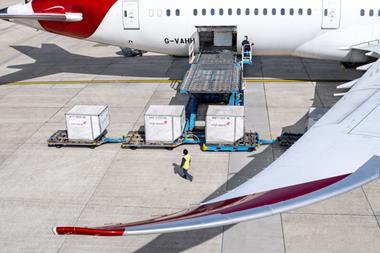






Virgin Atlantic Cargo is hoping to benefit from an expanded global network and the development of smarter services under the leadership of its new managing director, Nick Diesel.
Taking on the challenge of leading an air cargo business is always going to be tough, but approaching it with an eye for finance certainly helps.
Nick Diesel is six months into the role of managing director at Virgin Atlantic Cargo (VAC), having transitioned to the cargo side of the business from vice president of financial planning in his 10th year working for British airline Virgin.
During this current period of economic and geopolitical unrest due to tariffs, as well as Red Sea strife and ongoing Ukraine-Russia conflict, air cargo companies must anticipate and try and predict market developments and change.
Therefore, being able to make strategic decisions with financial knowledge at hand is a valuable skill.
But that’s easier said than done in air cargo, even when you have the experience to back it up. In Diesel’s case, five years of helping keep Virgin’s finances healthy.
“My previous role was running the financial planning team, where we did a lot of forecasting,” he says.
“And now that I’m in this role, trying to forecast what’s going to happen in the next few months in air cargo is extremely challenging.
“I think there’s a lot of uncertainty out there and we are really focusing on what we can control and making the best out of the environment we find ourselves in.”
Despite the volatile market, Virgin is faring well. Cargo revenues last year amounted to £236m, up 20% from £196m in 2023, according to Virgin’s 2024 annual report.
Yields were down 4%, but this was attributed to cargo market normalisation, additional belly capacity coming into the market and changes in currency, Diesel confirms.
Cargo volumes for the full year were 199,000 tonnes, up 26%.
“We finished in the number one position (for airlines) in terms of market share out of the UK globally. That’s not just on the destinations that we fly to, that’s across any destination,” stresses Diesel.
VAC’s volumes were aided by investment in specialist shipment services such as pharma, increased airfreight demand due to ongoing Red Sea conflict-related container shipping disruption and route expansion into India.
Virgin now runs five daily flights to India - two to Mumbai, two to Delhi and one to Bengaluru. Exports out of India include general cargo, e-commerce, pharma, fashion and textiles, while perishables volumes make up a major part of inbound volumes.
“There’s so much demand out of India that we have significant constraints on capacity.
Demand on the routes was propelled by the India-Europe shift from Red Sea to air shipping.
“With the disruption around the Red Sea, where we had a significant increase in terms of air cargo demand out of India that really supported our results through the year,” says Diesel.
He adds that VAC’s transatlantic network enabled the business to ship from India to the Heathrow facility in the UK and then on into the US.
First quarter 2025 volumes were up 20%, which Virgin has partly attributed to additional capacity from its India routes and front-loading from shippers and forwarders.
Overall, there has been strong demand across the network, including into the US, where Virgin flies to 17 destinations year-round, as well as South Africa, within which Johannesburg is a year-round destination and Cape Town is seasonal.
The second quarter also looks set to benefit from front-loading behaviour due to the pause in tariffs.
Diesel observes: “On our key lanes, including into the US, we continue to have capacity constraints, which we see as an encouraging sign.”
Network expansion
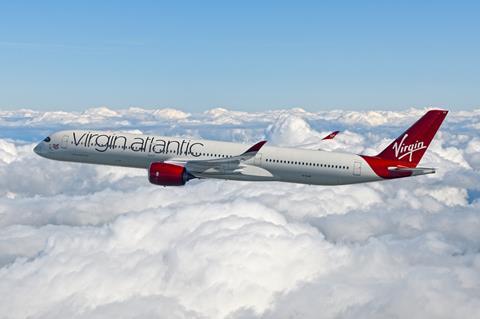
With its traditional transatlantic routes at its core, Virgin is widening its network further afield in the second half of the year and beyond.
Incheon, Korea will be added to the network in summer 2026 and will serve as a valuable cargo route in east Asia following the closure of the Shanghai route, Virgin’s sole China service, due to increased costs from avoiding Russian and Ukraine airspace.
Reflecting on the closure of the Shanghai route, Diesel acknowledges that the amount of capacity that had been placed in China made it a more challenging market, but stresses: “Being able to get access into that part of Asia again is really important.
“Incheon is going to be a fantastic market for us. We are super excited about starting the service at the beginning of summer next year on a daily, year-round service.”
Virgin also currently has a block space agreement with Korean Air on that route, which means it is familiar with the market, points out Diesel.
Riyadh, Saudi Arabia, joined the network in March, offering good airfreight volume prospects off the back of UK-Saudia Arabia trade growth.
In 2023, annual trade between the UK and Saudi Arabia was worth £17.1bn and it is expected to reach £30bn by 2030, according to Virgin.
March also saw Virgin return to Toronto, Canada, its first Canadian route in a decade.
VAC has a block space agreement with WestJet to sell cargo capacity out of Toronto Pearson International, and the route is also operated as part of Virgin’s five-year-strong joint venture (JV) partnership with Air France, Delta and KLM.
In light of challenges around US-Canada trade, Diesel notes there could be opportunities for cargo with improved trade between the UK, Europe and Canada.
Cancun will also be added to the network in October, but while a major tourist destination, the location doesn’t have obvious opportunities for air cargo.
“It’s a more difficult cargo market,” admits Diesel. “There’s not traditionally a huge demand in that part of the world, but we’ll find some opportunity to do well there.”
As well as its JV and block space agreements, VAC is interested in expanding its interline partnerships.
“It’s quite complex on the cargo side to get right, but looking at whether there’s an opportunity to expand on some of those interline partnerships that we have is probably the area we’ll next focus on.
“Working with partners helps us offer something slightly different and get into markets that we don’t have direct access into.”
Fleet flexibility
Sometimes fleet additions for belly cargo airlines can be overlooked in the airfreight industry, but Virgin is supporting its network development, as well as its environmental credentials, with notably modern aircraft.
In addition to introducing a carbon calculator for Cargo customers, and providing them with the opportunity to benefit from its SAF procurement, Virgin is targeting fuel efficiency.
According to Diesel, 82% of the fleet are next generation, with an average age of 6.9 years, far removed from the ageing fleet issues that some freighter operators are dealing with.
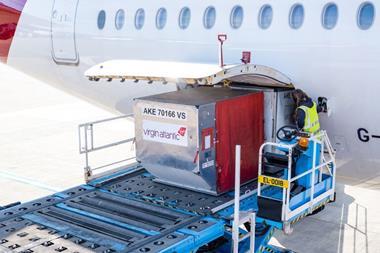
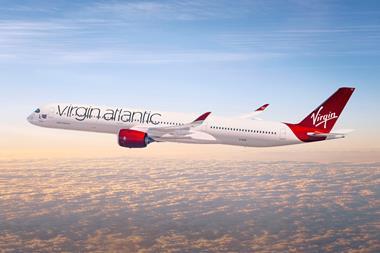
The current fleet includes 12 Airbus A350-1000s, 17 Boeing 787-9 Dreamliners, seven Airbus A330-300s and 8 Airbus A330-900neos.
The plan is to retire some of the older A330-300s to focus more on the newer A330neo aircraft.
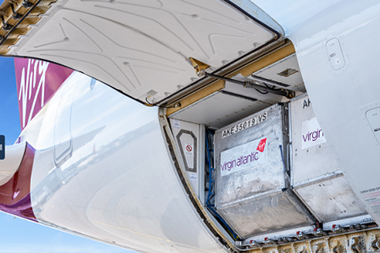
“By 2028 actually we’ll be 100% next generation. The aircraft all have really excellent cargo capability.”
He also points out that the airline has largely established security of operations with its prompt fleet transformation, considering the backlog in deliveries and difficulty in securing the right leased aircraft.
Belly capacity aside, Virgin did delve into freighters during the high demand, high rates pandemic years.
The airline previously had a London-Brussels service utilising an Airbus A321 passenger to freighter (P2F) aircraft operated by Titan Airways, which began in May 2022 and ran until October that year, after which it began operating on an ad hoc basis until Christmas.
From August to October 2022, VAC also ran a service that operated three times a week between Denmark’s Billund Airport and Heathrow using an A321P2F also operated by Titan Airways.
Virgin told Air Cargo News in 2023 that it would consider a similar freighter operation again only if the right economic conditions were in place.
Then from October 2024 to March 2025, the carrier ran daily cargo only flights to Brussels using belly capacity in its Airbus A330-300 and Airbus A350-1000 aircraft.
The flights carried up to 50 tonnes of time-critical goods such as perishables and pharma, usually transported from Heathrow Airport to European hubs by truck services.
Speaking about what became of those shipments, Diesel explains: “We have a block space agreement in place with DHL, which has a direct flight out of Brussels to Heathrow. Some of that volume is coming through on that service which we then pick up and connect wherever it needs to go, some of it is being trucked as well.
At the end of 2024, ECS Group’s subsidiary TCE (Total Cargo Expertise) began working as VAC’s general sales and service agent (GSSA). It now represents VAC in 14 countries across continental Europe, with trucking management amongst its services.
The contract had seen the implementation of a TCE-managed “control tower and operating platform within Europe to help optimise the trucking out of Europe into the UK”.
But serving as an example of the unpredictability of the cargo market, where the freighter venture and trucking service has excelled in strengthening Virgin’s multimodal cargo network across Europe, it came at a time when Virgin cancelled the service between Heathrow and Ben Gurion in Tel Aviv due to conflict in Israel, although it has a codeshare partnership with EL AL to serve the route.
Despite the success of its past freighter operations, VAC is now keen to keep the focus on its long-haul destinations and stick to the flexibility and variety that its passenger aircraft fleet enables for taking advantage of cargo opportunities.
“Our fleet is designed to service longer haul destinations with passengers and cargo. So that’s likely where we’ll see it remaining,” says Diesel
He adds: “One of the great advantages we have as a passenger service is being able to tap into markets that freighters wouldn’t necessarily go to, because there isn’t enough cargo demand for a whole freighter.
“For example, the Maldives does pretty well for us on the belly of a passenger plane, but there probably wouldn’t be enough demand for a freighter.
“So we can really leverage our set up to tap into slightly different markets and give our customers a bit more choice and variety.”
Eye for finance
While network and fleet may be new territory for Diesel, finding ways to improve services and boost revenue is not.
While he only took up the managing director VAC position in December, after spending three and a half years in his finance role, Diesel is well versed with Virgin’s operations.
He has spent 10 years in various roles at the airline because he enjoyed the “different challenges” they presented.
After starting his career as a management consultant for Deloitte, he joined Virgin in 2015, spending nearly four years in financial planning and analysis, during which time he was finance lead for Virgin’s expanded joint venture agreement with Air France-KLM and Delta.
He then spent six months as head of the Connect Airways Programme, a consortium formed by Virgin and Stobart Air to acquire former British low-cost airline Flybe. This was followed by a secondment stint as transformation director for Connect.
He also spent time as interim head of corporate strategy, recapitalisation programme lead – where he managed the airline’s £1.5bn recapitalisation project during the pandemic, and head of business intelligence & reporting.
As well as readily professing that he had a “fascination with cargo” before winning the managing director role, the diversity of his previous roles has helped Diesel understand the perspectives of different stakeholders in the business.
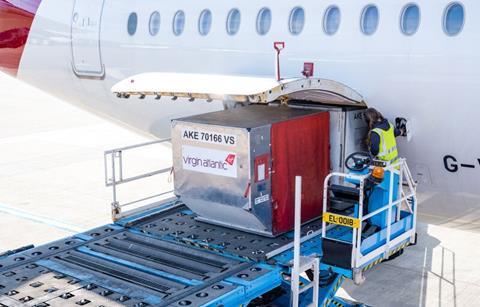
One focus for further increasing cargo revenues is this year is targeting high-value, premium products, such as pharmaceuticals, the fastest-growing product for Virgin.
“We’ve seen a lot of growth in pharma,” explains Diesel. “And I think there are more opportunities there. We have good temperature control facilities at our dnata City East facility at Heathrow to prepare cargo for onward flights to places like Bengaluru in India, all the way through to the US.”
Another area of higher value growth is car shipments. “We are one of few airlines that can offer two position cars on the bellies of our aircraft, alongside staff highly trained in loading and unloading,” adds Diesel.
But as well as honing its premium products offering, Virgin is looking beyond revenue to how customer service can be improved through shipment handling.
Diesel says he is looking to “bring more of a performance mindset to focus not just on the revenue, but also the contribution that each shipment brings”.
However, because of the uncertainty in the market, he says Virgin is mindful not to be too prescriptive, but rather continuously review the situation.
Other revenue-driven focus areas include improving technology to better manage increased interline business, as well as capacity and rate options for forwarders.
The airline plans to develop its partnerships with digital booking platforms cargo.one, where it placed its capacity in May 2023 and WebCargo by Freightos, with which it partnered in February 2024.
Virgin’s 2023 investment in Accelya’s FLX Cargo Platform to power its cargo management platform, Voyager was aimed at a multi-distribution strategy, which includes its own website, third-party marketplaces, and direct forwarder integration. It also paves the way for the airline to move into dynamic pricing.
“The next stage for us is using dynamic pricing within our system. It unlocks a huge amount for us, from a distribution perspective.”