


Airfreight rates on key trade lanes out of Hong Kong continued to reflect the quieter summer period in August, ahead of a predicted pick up for the peak season.
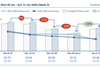
The latest figures from the Baltic Exchange Airfreight Index, which uses TAC Index data based on spot and contract pricing, showed that rates from Hong Kong to North America picked up slightly in August, increasing to $5.29 per kg compared with $5.11 per kg in July.
From Hong Kong to Europe, rates were down slightly in August at $4.26 per kg compared with $4.39 per kg a month earlier.
Rates on both trades were down on a year ago - prices from Hong Kong to North America were 11.2% down year on year in August, while to Europe they were 3.8% down.
The decrease from last year’s levels reflects weaker demand levels and lower jet-fuel prices.
In its end-of-August weekly market update, TAC Index said rates on a global basis had been flat in August due to the quieter summer period.
”Despite reports of continuing high demand in certain sectors ranging from garments and pharma to electronics and semiconductors as well as capacity constraints causing delays in certain markets, overall rates were still flat to down as the traditionally quieter summer ‘low season’ continued,” TAC said.
Looking to the peak season, freight forwarder Dimerco is expecting a shift in transpacific volumes away from the China as companies adjust their supply chains in light of Washington’s tariffs on the country.
“The traditional peak season for airfreight begins in September, with stronger export flows anticipated from Southeast Asia, particularly Vietnam, Thailand, and Malaysia, into the US, surpassing volumes from China,” Dimerco said.
“Airlines are already preparing additional capacity to meet this growth, driven largely by AI servers, consumer electronics, and other high-tech products on Transpacific Eastbound (TPEB) routes.”
Dimerco said that overall US import volumes are expected to decline by 5% this year. However, airfreight may fare better than the overall performance as companies look to the mode for front loading ahead of any tariff hikes.