

Capacity additions come as the industry grapples with the end of US de minimis exemptions, weakening China-US volumes and emerging opportunities in Southeast Asia
The global freighter fleet has faced growth issues for quite some time, but just as capacity has begun picking up, trade is facing hurdles.
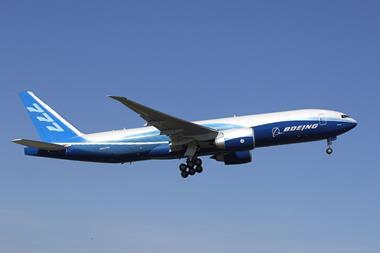
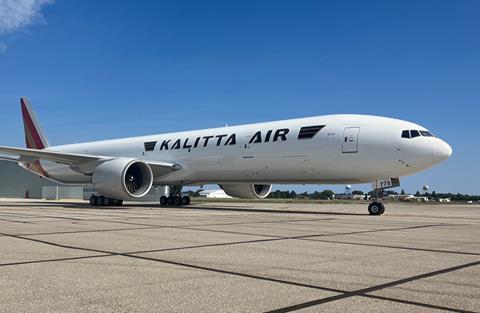
In early September, the global freighter line-up was extended with the addition of the first Boeing 777 passenger-to-freighter (P2F) aircraft.
Having finally received supplemental type certification from the US FAA after a long wait, Israel Aerospace International (IAI) understandably wasted no time flying the first two B777-300ERSF aircraft to Michigan, US for lessor AerCap to hand over to launch operator Kalitta Air.
After a long drought caused by aerospace supply chain problems, Boeing’s reckoning with systemic issues and seemingly endless delays in 777 conversion certification, the global fleet of large widebody cargo planes has grown markedly in recent months.
Boeing delivered 20 B777-200Fs in the first half of this year, having produced just 13 in the whole of 2024.
Somewhat ironically, global freighter fleet growth picks up at a time when trade is facing hurdles. The end of the de minimis exemption for parcels entering the US has dented e-commerce flows to the largest market, and the Chinese export juggernaut is facing strengthening headwinds.
In this light, Air Lease's decision to drop its order for A350 freighters could be seen as an indication of waning confidence in air cargo.
On the other hand, airfreight demand has remained surprisingly strong, showing growth in July and August. China-US volumes are down in double digits, but other sectors, such as China-Europe or Vietnam-US, have shown solid growth. E-commerce traffic to Latin America is booming.
For sure, this is not a zero-sum game. The US market is too big to be replaced by increased traffic to Europe and Latin America, China’s structural problems are hobbling its economy, the end of de minimis is forcing changes in traffic flow, and consumer confidence is showing the impact of uncertainty and accelerating job losses.
The global economy and the air cargo industry are facing a bumpy road through challenging times.
Still, trade continues, and the genie of e-commerce is not going to get back into the bottle. New opportunities beckon. For one thing, the heightened speed of the ‘China-plus-one’ trend is creating rising export volumes from Southeast Asia that existing capacity – especially in regard to connectivity to transpacific lift – is struggling to meet.
The industry has to be nimble to react to these changes, and it needs processes and protocols that enable and support this. There is room for pioneering solo ventures, but equally, if not more, important are closer alignments of partners and a push on regulators to facilitate rather than stymie this.