



It's unlikely e-commerce de minimis changes will cause another surge in airfreight volumes, while peak season projections are underwhelming.
The surges are diminishing. The end of de minimis exemption for China-origin parcels entering the US produced a spike in e-commerce flow before May, followed by a slump in volume.
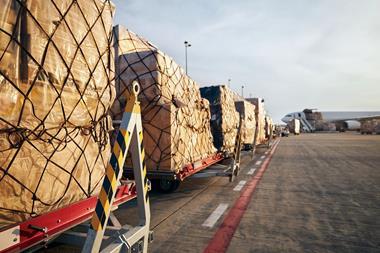
The détente in the US-China trade war in early May unleashed another spike in US-bound shipping that caused congestion at Chinese ports, but the vision of clogged-up US container gateways triggering another surge in airfreight proved elusive.
Going forward, there are no indicators of factors that would augur rampant demand spells. Projections for the peak season are rather muted, both on the water and in the air.
The fizz has gone out of airfreight, which is starkly reflected in IATA’s revised projections for this year. In late 2024, the airline body predicted airfreight volumes would reach 72.5m tonnes in 2025, up 5.8% from last year, with cargo revenues projected to reach $157bn.
New figures released in early June show a modest 0.6% increase in tonnage to 69m tonnes. IATA now predicts full-year cargo revenues of $142bn, a 4.7% drop from last year, with yield falling by 5.2%.
Economic indicators give little cause for optimism. The OECD dialled back its 2025-2026 global economic growth projection to 2.9% and warned that additional trade barriers or prolonged uncertainty could lower growth prospects further.
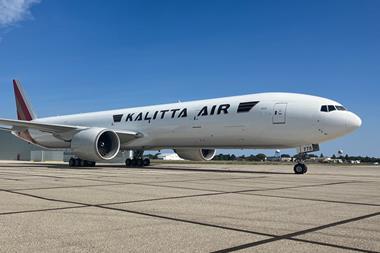
Meanwhile, airfreight capacity is on the rise, notwithstanding the notorious problems that have bedevilled aeronautics supply chains.
In May, maindeck capacity was up 4.6%. Boeing has accelerated its widebody freighter output, and for every three new planes entering the market in the coming months, 1.5 will be retiring.
This is ominous. According to one observer, airfreight volume this year will be at the level of 2019, if the e-commerce portion is factored out. When US de minimis for parcels from China ended dozens of transpacific charters were cancelled.
Some freighter capacity returned in May upon the rapprochement between Washington and Beijing, but older freighters – notably Boeing 747-400s – are expected to be retired in the second half of this year and in 2026.
One promising aspect is the fact that supply chains are changing as firms modify their supply chains to reduce reliance on China. In many cases, scheduled lift out of emerging origin markets is limited, opening opportunities for freighters.
Besides, there is still ample room to refine processes and hone collaboration with industry partners.