





Source: Jaromir Chalabala/Shutterstock
Airfreight rates on key trade lanes out of Hong Kong declined only slightly in June, reflecting the quieter summer period and despite the Middle East conflict.
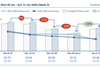
The latest data from the Baltic Exchange Airfreight Index, which uses TAC Index data, showed that average rates - both spot and contract - from Hong Kong to North America in June declined to $4.99 per kg from $5.08 per kg a month earlier.
Compared with last June, rates on the trade are down 13.2% but this perhaps reflects the strength of the market going into the summer last year as much as it does the current uncertainty.
A slight decline in rates between May and June isn’t unusual as the industry enters the quieter summer period and extra bellyhold capacity is added to the market for the summer tourist season.
Last year, however, rates were on the rise in June as the air cargo market continued to benefit from modal shift from ocean to air due to the Red Sea crisis, while e-commerce demand was increasing.
In contrast, this year, demand from China and Hong Kong to North America would have been negatively impacted by US tariffs of 30% and the end of the de minimis exemption for e-commerce shipments from the origins, with parcels being subject to a 30% rate when being transported on commercial airlines.
There was also a slight decline in rates between Hong Kong and Europe, with rates in June slipping to $4.36 per kg compared with $4.39 per kg in May. Compared with last year, rates on the route are down 4.4%.
On the transatlantic, rates from Frankfurt to North America continued to slide as bellyhold capacity is added to the market for the busy summer holiday season.
In its monthly rate round-up, TAC Index pointed out that airfreight rates on a global basis had been largely unaffected by the US tariffs or the Middle East conflict in June.
"June may have been a tumultuous period in terms of geopolitical developments but global airfreight rates changed very little during the month,” TAC Editor Neil Wilson wrote.
"During that period of turmoil, there were many delays and cancellations to air traffic in the Middle East. Crude oil prices surged, while jet fuel prices jumped nearly 20% month-on-month (MoM) to 20 June, according to Platts’ data, before falling back sharply after a ceasefire was declared on 24 June."
Wilson said that the global Baltic Air Freight Index barely moved, drifting "a tad lower" by 1.1% over the four weeks to 30 June – leaving it down by 5.3% year on year (YoY).
He pointed out that this small decline is partly down to the fact that the busy transpacific and transatlantic trade lanes do not transit the Middle East, even though there is a lot of air cargo that also moves from Asia to the Americas via Middle East carriers.
Commenting on the transpacific trade, Wilson said that some contacts had suggested the outlook "might be a little more bearish" given the withdrawal of some widebody freighters from transpacific lanes following the US-China trade standoff.
"Others, however, suggest the market has continued in a pattern of complex interaction between the supply and demand we have witnessed all year.
"It has been suggested that capacity – particularly on Transpacific lanes, which are dominated by freighters rather than passenger bellyhold volumes – was continuing to adjust rapidly to the rise and fall of demand.
"Hence, in periods when demand has been strong, such as in the runup to President Trump’s announcement of higher tariffs on China, capacity has also been high – and then cut back after the tariffs were announced."