


German logistics giant reports stable pricing dynamics despite capacity additions on intra-Asia and Asia-Europe routes during Q3 results call
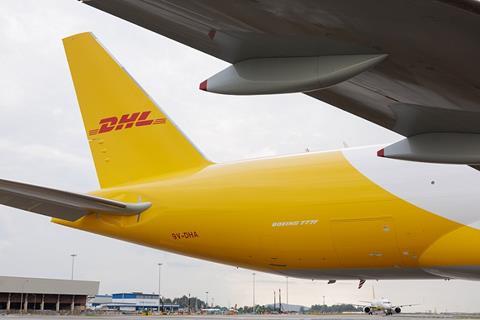
DHL said it does not perceive increasing air cargo capacity on intra-Asia and Asia-Europe trade lanes as a threat to its business performance.
Speaking during the company’s third-quarter investor call, Melanie Kreis, chief financial officer and member of the management board, indicated that DHL hadn't so far had to adjust rates to account for increased capacity on the trade lanes.
Kreis was responding to a question on whether competitors adding airfreight capacity on intra-Asia and Asia-Europe lanes, where Express margins are higher than the divisional average, would potentially result in market share losses or margin compression next year.
Kreis said that "the fact that intra-Asia and Asia to Europe is developing more favorably, which is why others are apparently thinking about moving capacity there, is ultimately a good thing because those trade lanes are strong trade lanes for our market position in terms of profitability".
She added: "So I see it more positive if intra-Asia and Asia to Europe is developing favourably. And yes, I think overall, we haven’t seen any crazy capacity movements leading to difficult pricing situations beyond the normal competitive dynamics."
Tobias Meyer, chief executive of global business services & chairman of the management board, agreed that increased activity on these trade lanes is positive.
He said: "I would echo that. So this is good. We see ourselves in a very competitive situation, both intra-Asia. We sometimes say that Asia is DHL's second home and also Asia to Europe. So the trends that you're seeing that competitors are more interested in them is something that we recognise and overall see as a positive message of this being a trade lane where we can also expect some growth in 2026."
The German logistics company reported that airfreight volumes amounted to 444,000 tons in the third quarter, down 0.2% on the 445,000 tons recorded in the third quarter of 2024. DHL said it saw "largely unchanged volume momentum vs. Q2".
In comparison, Kuehne+Nagel's (K+N) airfreight volumes were up 7.2%, and DSV's grew by 64%, following the acquisition of Schenker.
Meanwhile, airfreight revenue in the Global Forwarding, Freight (GFF) division fell by 7% year on year to €1.5bn year on year. However, gross profit rose by 5.9%.
DHL noted that there had been a decrease in the transport of high-volume, low-yield business that had affected volume growth this year.