



The air cargo market should be prepared for future capacity constraints as both production freighters and aircraft feedstock for conversions are scarce.
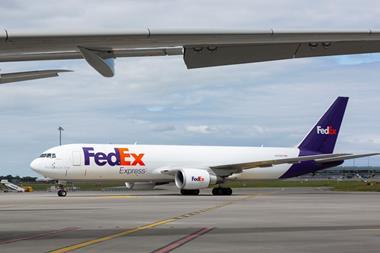
Is FedEx the proverbial canary in a coalmine? In its fiscal fourth quarter the integrator retired 12 freighters, including three MD-11s. Earlier this year management had decided to push back the retirement of its MD-11 fleet, citing strong demand.
E-commerce was lifting airfreight to new heights, but the end of the de minimis exemption for US e-commerce imports from China triggered cancellations of dozens of cargo charters in that lane.
China-US e-commerce traffic cratered, but this did not bring down the market; the apocalypse for freighters did not materialise. Instead, e-commerce shippers pivoted to other markets and routings.
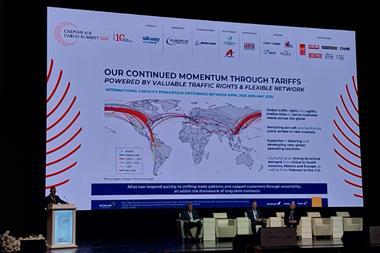
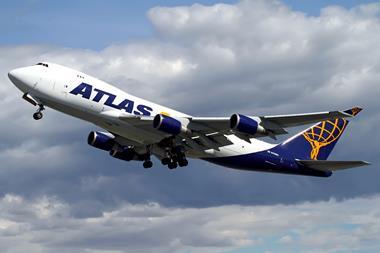
Predictions of a freighter glut sound wildly off the mark today. Recently Atlas Air chief executive Michael Steen warned of a looming shortage of large widebody freighters for the next ten years or more.
A large contingent of today’s fleet is headed for retirement, and output of new freighters is in slow gear, threatening a scenario where retirement of widebody cargo planes outruns fleet replenishment.
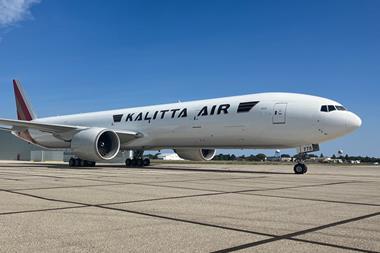
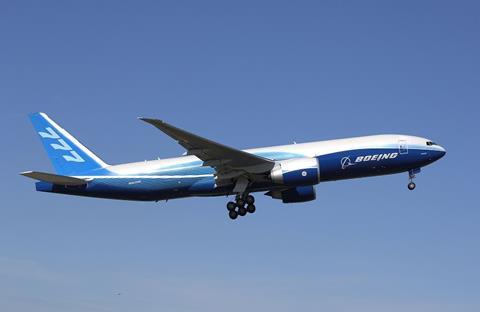
With no more Boeing 747s being produced, the future in the large widebody segment is all about Boeing 777 and Airbus A350 freighters. However, production of the 777-200F is set to end in 2027 – before the 777-8F and the A350F will enter the market.
That leaves 777 conversions to bridge the gap. As of today, none of these programmes have obtained certification, though, notwithstanding a string of frothy predictions of their imminent breakthrough.
If anything, the past few years have produced an increasingly sharper picture of large widebody conversions as well as output of production freighters continuing to recede into the future.
Certification of conversion programmes will likely prove a minor problem compared to the availability of feedstock. Robust demand in the passenger sector has prompted airlines to hang on to their ageing 777s well beyond their anticipated retirement horizon.
Moreover, the costs don’t add up at present feedstock prices. According to IBA, a converted 777-300ERSF in half-life condition likely goes for $75–80m (with costs closer to $100m if the engines need work).
Steen draws a concerning picture. “We are going to be capacity-constrained well towards the 2040s, and there is structurally no way around it from a capacity perspective,” he recently commented.
And then there is the small matter of the people needed for freighter operations. According to CAE’s latest Aviation Talent Forecast, between now and 2034 the industry will need 1.5m new civil aviation professionals, including 300,000 pilots and 416,000 maintenance technicians.