
New framework provides legal recognition for negotiable transport documents across all modes, supporting digital trade and operational flexibility.

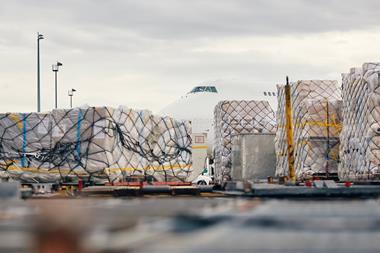
Photo: Jaromir Chalabala/ Shutterstock
The United Nations (UN) General Assembly yesterday adopted a convention on negotiable cargo documents that will enable goods to be bought, sold, or used as collateral while still in transit.
Freight forwarder group FIATA said the adoption of the convention marks a ”significant milestone for international trade, multimodal transport and the digitalisation of global supply chains”.
Unlike ocean bills of lading, transport documents issued by rail, road and air carriers, which are often known as consignment notes or air waybills in the case of air cargo, are not used as documents of title and cannot be transferred to another party during transport.
In essence, this means cargo cannot be sold or transferred between parties while it is in transit.
The new convention will establish negotiable cargo documents as a title representing goods in transit across all modes of transport, which could be used to enhance flexibility in trade, bridge the trade finance gap and support the digital transformation of global trade.
The convention can be applied without changing existing documentary or operational processes, requiring only a simple notation on the bill of lading indicating that it is subject to the convention.
"The convention establishes a harmonised and technology-neutral legal framework to support the negotiability of cargo documents across all modes of transport and in both paper and electronic form in line with the principles of the United Nations Model Law on Electronic Transferable Records,” FIATA said.
FIATA said the key benefits include: Legal recognition of the negotiability of multimodal transport documents; opt-In flexibility, allowing commercial parties to decide whether to apply its provisions; a harmonised and technology-neutral legal framework for use across jurisdictions and transport modes; explicit recognition of electronic negotiable transport records, supporting digital trade and legal equivalence between electronic and paper NCDs across all transport modes; and preservation of existing transport liability regimes ensuring continuity and legal clarity for freight forwarders and their clients.
A formal signature ceremony for the convention is expected to take place in the second half of 2026.
The convention will enter into force once ten States deposit their instruments of ratification.
"FIATA encourages governments and industry stakeholders to familiarise themselves with the Convention’s provisions and to support early ratification so that businesses can begin to realise the benefits of this modern legal framework without delay," the forwarding group said.
"In parallel, FIATA is ready to help the industry to operationalise the FBL upon the Convention’s entry into force, ensuring a swift and practical transition from legal adoption to operational use."
The development of the convention has been in the works since 2024.
In July, the convention gained approval from the United Nations Commission on International Trade Law (UNCITRAL).