

The ending of the de minimis exemption for Chinese e-commerce parcels has reshaped transpacific cargo flows, with carriers pivoting capacity to Southeast Asian markets

The Transpacific trade lane has seen a shake-up this year with the rollout of tariffs and the end of the de minimis exemption, but how exactly have supply chains changed as a result and to what extent?
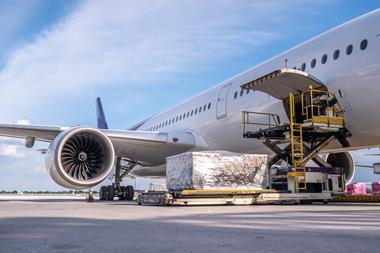
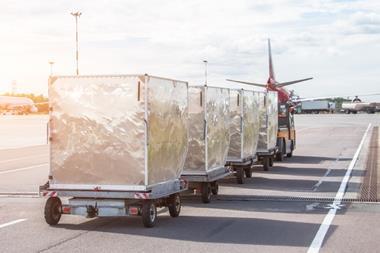
US trade policy has had a pronounced impact on transpacific cargo flows, most notably the ending of the de minimis exemption for parcel imports from China, which precipitated a slump in US-bound airfreight volume and an exodus of freighter capacity looking for alternative markets.
Airfreight traffic from China to the US dropped over 30% in May amidst a flurry of cancellations of cargo charters.
“I don’t think we’ll put back our e-commerce programme any time soon. With the elimination of de minimis there was almost no point to continue,” says John Wolf, air sales manager of OEC Group. Until early May, the logistics company used to run weekly consolidations from Shanghai to the US.
Some freighters that had hauled e-commerce across the Pacific were redeployed to Asia-Europe routes, some now serve Latin America, which continues to show a strong appetite for e-commerce.
Nippon Cargo Airlines (NCA) recently resumed flights to Frankfurt. While the transpacific remains the focus of the carrier’s activities, this move constitutes a step to rebalance and diversify its market coverage, says NCA Americas president Shawn McWhorter.
“I think people will slowly re-allocate capacity away from (the) transpacific,” he adds.
Matt Casey, managing director of commercial cargo at Air Canada (AC), has seen a rise in freighter flights to Latin America, adding that traffic to the southern hemisphere has shown a “huge increase”.
“Last year, growth to the US and Latin America was equally strong, almost triple-digit percentage increases. This year we’ve seen a bit of Asia Pacific to the US and continued rapid growth to Latin America – over 100%,” he says.
A large portion of e-commerce exports from China used to flow through gateways like Seoul, Hong Kong and Taipei. As this volume dropped or switched to ocean transport in a shift to B2B2C logistics, these markets saw a decline, observes Jeffrey Shih, chief executive of Dimerco.
Nevertheless, the transpacific airfreight market has not shown any huge changes – unlike the ocean container segment, which experienced wild swings in volumes in response to tariff changes, notes Jan Krems, president of United Cargo.
Overall, demand as well as pricing in the air cargo sector saw week-to-week changes in low single digits through most of the summer
Overall, demand as well as pricing in the air cargo sector saw week-to-week changes in low single digits through most of the summer, indicating a relatively stable environment, despite the turmoil caused by repeated changes in US tariff policies.
McWhorter describes the market as “decent, fairly balanced with supply and demand”, adding that large forwarders have continued to use dedicated capacity.
Dimerco reported in early September that rates out of southern China were rising again, and DHL resumed its flights from Shenzhen to Los Angeles and on to its main US hub in Cincinnati.

China to Southeast Asia trade strengthens
Export growth to Europe aside, weaker volumes out of China across the Pacific have been somewhat compensated by a corresponding rise in exports from China to Southeast Asia and from that region to North America.
In its September market report, Dimerco predicted stronger export flows, especially from Vietnam, Thailand and Malaysia, driven by US demand for AI servers, high-tech products and consumer electronics. It added that space out of these markets was likely to tighten.
“With the tariffs, we see a lot of companies shift to Southeast Asia,” remarks Shih. He adds that Taiwanese manufacturers have also been shifting production to the region.
“We observed significant growth in tonnage from Southeast Asia and Taiwan,” says Tom Owen, director cargo of Cathay Pacific. The Association of Asia Pacific Airlines reported an 8.6% rise in cargo in July.
Vietnam has been something of a poster child for the rapid growth in Southeast Asia. In the first half of the year, airfreight tonnage out of the nation rose 12.5% year on year to 811,400 tonnes, while capacity out of Hanoi and Ho Chi Minh City increased 17% and 11.2% respectively.
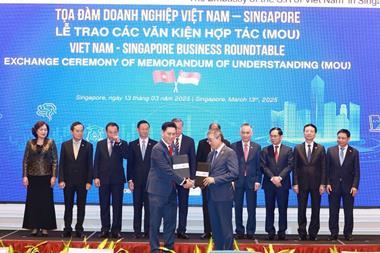
More expansion is on the cards. Ho Chi Minh City’s new Long Thanh International Airport is scheduled to open next year. In March, Vietnam Airlines and SATS signed an MoU to build and operate an air cargo terminal at the airport.
Vietnam’s national carrier aims to carry 346,000 tonnes this year, 11.5% more than in 2024
Vietnam’s national carrier aims to carry 346,000 tonnes this year, 11.5% more than in 2024. It has also revealed plans to establish a freight subsidiary next year.
The rise in traffic has put the capacity from the region under strain and pushed up pricing. OEC is hiring a new manager in Vietnam to help cope with the increased demand there. “Vietnam seems the new hotspot,” says Wolf.
For the North American airlines, their ability to tap into this bonanza is constrained to begin with, and their inability to traverse Russian airspace further limits their reach. AC uses its west coast gateway in Vancouver to reach Asian destinations, but they are out of reach from its hubs in eastern Canada. When it comes to Southeast Asia, it relies mostly on interline arrangements via Tokyo and Seoul.
“Interline is the shining part for us,” says Casey. AC uses this with partners both for offline stations and markets where it flies but wants to supplement lift.
“Out of India and Thailand we were able to almost double the volume compared to what we can do ourselves,” he notes.
United has flights to Hong Kong with connections to Vietnam and Thailand, but its primary reach south is on its over 12 daily flights out of Japan. Even this is limited, though. “Sometimes we haven’t got enough capacity out of Singapore,” says Krems.
Like AC, United leverages interline partnerships for additional lift to and from Southeast Asia, notably its collaboration with All Nippon Airways. While it wouldn’t go into freighter operations itself, the US airline does utilise external maindeck capacity through partnerships with other carriers – usually short-term contracts to meet customer needs, says Krems.
His team is currently working on a plan to organise a freighter link to Southeast Asia to get more capacity in that market.
McWhorter is also looking to extend NCA’s reach to Southeast Asia following the merger with ANA, which is finally moving ahead after a long wait to obtain regulatory approval in multiple markets.
“They’re going to places where we are constrained. We haven’t got enough capacity to serve Singapore and Bangkok,” says McWhorter. For the foreseeable future, the pair will continue to operate as separate airlines, but they can work more closely together," he adds.
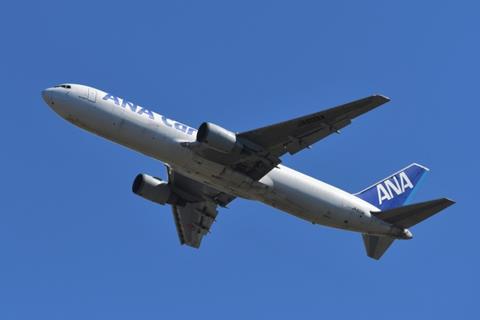
A key focus is the alignment with ANA’s intra-Asian freighter network, which utilises six Boeing 767 freighters and two Boeing 777 freighters, with another two on order. ANA has daily connections to markets like Bangkok and Taipei, McWhorter points out.
Down the road, he sees opportunities in the transpacific sector to align with ANA’s passenger services, which would add North American points like Seattle, Vancouver, Washington and Houston to the online network and boost capacity to LA and New York, which are served by both carriers. “We want to sell both networks and create new routing opportunities,” he says.
Airports review transit connectivity
The rise of traffic from Southeast Asia has prompted airports as well as airlines to look at connectivity for transit cargo. In May, Hong Kong International Airport registered a 12.7% increase in transhipments.
The airport is looking to boost this further with its ‘CargoConnect’ platform for interline transfers, which was formally launched in late June. The digital platform is the first online ecosystem set up at an airport that allows carriers to find interline partners and collaborate on transfers, both on a bilateral and multilateral basis.
The concept was tested in collaboration with nine partners, including airlines, GSSAs and terminal operators. According to the airport authority, it is scalable and has received positive feedback.
Owen is bullish on transit business. “The growth in transshipments represents the effective operation of our network, where we connect cargo to over 50 destinations via freighters and more than 100 destinations via the Cathey Group’s passenger aircraft through the hub,” he comments.
While overall transpacific volumes and pricing have not changed much, the terms of engagement with customers have shifted to shorter horizons. Shih remarks that contracts have typically been for one year, but this changed this year in many cases to six- or three-month terms.
There has also been more use of mixed solutions, such as commitments to a certain tonnage at a fixed rate plus an additional volume eligible for some discount.
“Customers don’t want long contracts; they want something that’s more flexible and can bend with the market,” says Wolf. “Our BSAs tend to be quarterly.”
Despite the uncertainty, industry executives are upbeat on the outlook for the transpacific market.
While tariffs and the end of de minimis exemption have affected demand, US policy is forcing semiconductor manufacturers and other tech firms to establish production facilities in the US in order to be able to import parts at lower tariffs, which augurs strong growth in this segment, remarks Shih. Dimerco is planning to boost its footprint in the US market from currently 16 branches to 30.
OEC also remains in growth mode. “We continue expanding on our offerings out of the entire Asia Pacific region. We’ll develop more consolidations,” says Wolf.
Owen still sees room for growth with e-commerce, especially to markets that have not reached elevated saturation levels, and he remains upbeat on other sectors.
“While e-commerce shipments remain a key volume driver for Cathay Cargo, even with some softening in the Chinese mainland to United States trade lanes, we are also witnessing robust demand in high-tech electronics and semiconductor machinery, particularly on routes between North Asia and North America,” he notes.