



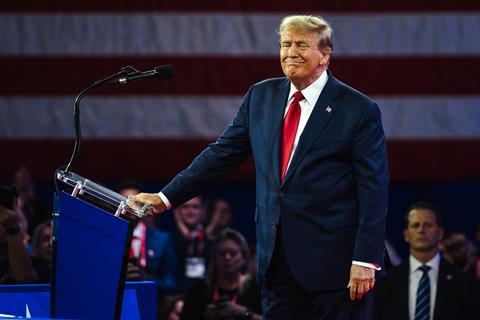
US president Donald Trump has delayed the implementation of country-specific tariffs until August in order to give countries time to continue negotiations but has threatened a huge levy on imports of pharma products.
In an executive order published earlier this week, the White House said the tariffs on a range of countries would now come into effect on 1 August. They had been due to start on 9 July.
However, not all countries included in the original list have received letters from the White House confirming the delay and whether the rate has changed.
The start of the country-specific tariffs is likely to put air cargo volumes to the US under pressure, so the delay should be a relief for the industry.
The tariffs were first proposed in early April but were later delayed for 90-days, giving countries until 9 July to negotiate with the US.
Countries included in the tariffs that are confirmed to have been given a temporary reprieve are Japan (facing a rate of 25%), South Korea (25%) and South Africa (30%).
Other countries' tariff rates can be found here.
"The president may send some more letters in the coming days and weeks," the White House said.
So far, the European Union, which originally faced a 20% tariff, has not been mentioned. Meanwhile, Trump has threatened Brazil with a tariff rate of 50%, compared with its original 10% rate.
In the meantime, rates will remain at 10%.
Vietnam and the UK were also included in the initial list of countries, but both have since reached an agreement with the US.
Most recently, Vietnam negotiated a tariff rate of 20% while transhipments going through the country will pay a 40% levy.
The country-specific tariffs are separate from those on China, which currently stand at 30% but are due to ramp back up from 12 August if an agreement cannot be reached.
Pharma threats
Elsewhere, Trump has announced a 50% tariff rate for copper imports into the US and threatened a 200% tariff on pharma imports into the country, which are currently exempted from the duty hikes.
At this stage it is unclear when - or if - the US will formally announce the pharma tariffs and when they could take effect.
The director general of the UK's Chartered Institute of Export & International Trade, Marco Forgione, said that tariffs with a rate of 200% would "reverberate through global pharmaceutical supply chains".
"UK exporters are deeply integrated into US healthcare delivery, from innovative treatments to specialist manufacturing inputs. Any move to isolate or penalise those partnerships risks triggering a counterproductive scramble to localise production, which would raise costs and delay access to lifesaving treatments on both sides of the Atlantic," said Forgione.
“Pharmaceutical supply chains are also incredibly complex, and any tariff could carry real global consequences."
According to The Observatory of Economic Complexity (OEC), the US imported $212bn of pharmaceutical products in 2024, making the product type the 5th most imported into the country.
The fastest growing origins for Pharmaceutical products imports in the US between 2023 and 2024 were: Ireland ($14.3bn), Singapore ($5.81bn), and Belgium ($5.66bn), the OEC figures showed.