
This integration enables customers to perform key tasks such as checking schedules, viewing rates, making reservations, and transmitting waybills
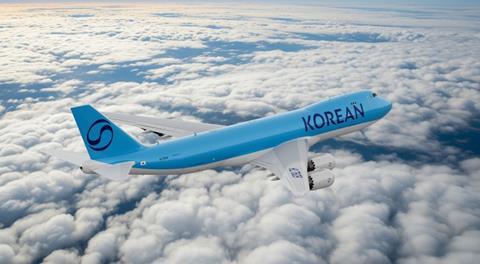
Korean Air has launched a new Application Programming Interface (API)-based solution that enables direct integration between its cargo system and its customers’ in-house systems.
The API solution allows for the real-time exchange of data. This integration enables customers to perform key tasks such as checking schedules, viewing rates, making reservations, and transmitting waybills directly from proprietary platforms without having to access a separate system.
“This API integration is a key part of our digital transformation,” said a Korean Air representative. “We are proactively enhancing our operations to lead innovation and solidify our position as a leading global air cargo airline.”
The South Korean carrier, which in December completed the $1.3bn acquisition of Asiana Airlines, said the initiative is part of its response to rapid e-commerce growth and increasing market demand for greater logistics transparency and efficiency.
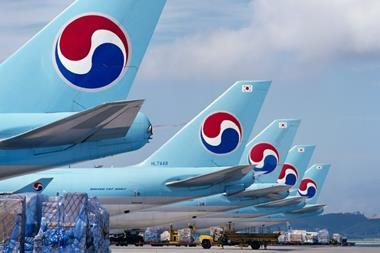
Korean Air’s global network spans 116 cities in 39 countries, supported by a freighter network covering 46 cities in 27 countries.
The airline has a fleet of 164 aircraft, including 23 dedicated freighters that include Boeing 777Fs and 747-8Fs.
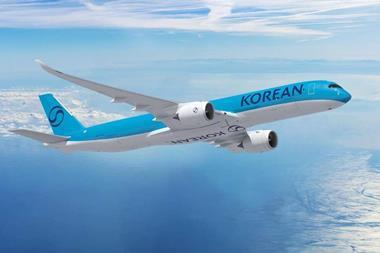
In August, Korean Air committed to purchasing eight 777-8 freighters from Boeing, and then last month, Airbus confirmed that Korean Air had converted seven of an existing order for A350 passenger aircraft to the freighter model.
Korean Air Cargo owns and operates a 100,000 sq m cargo terminal at its main hub at Incheon International Airport (ICN), and has dedicated cargo terminals in New York, Los Angeles, Narita and Osaka.
Korean Air Cargo also operates the Cool Cargo Center in Incheon, a specialised facility capable of storing and processing over 150 tons of fresh cargo.