
The Board of Airline Representatives in Germany (Barig) and German Aviation Association (BDL) have called for the cost of cargo operations to be lowered and the removal of bureaucracy in order to secure the competitiveness of Germany as an airfreight location.
The associations said that the airfreight market was suffering from deteriorating conditions and to help alleviate pressure, they had co-written a white paper with five key demands.
The associations made the call as the Federal Ministry of Transport expects minimal growth of 1.1% in cargo volumes, totalling around 5m tons in loading and unloading.
In contrast, IATA expects a further increase in global freight volume of 6% in 2025, although this global figure is expected to be lowered at the airline association's AGM.
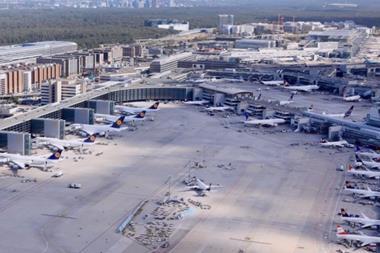
According to the German Airport Association (ACI), Frankfurt Airport lost its position as Europe's largest air cargo hub to Istanbul last year.
Its figures show that Istanbul handled 1.97m tons last year, while Frankfurt handled 1.95m tons.
The five demands include:
1. Reduction of state location costs: This involves the abolition of the national quota to include 0.5% of synthetic fuel in 2026, rising to 1% in 2028 and 2% by 2030. To help reduce costs further, a significant reduction in the costs for aviation security, infrastructure, air traffic control, and sustainable fuels, as well as a competition-neutral revision of the EU climate protection package, “Fit for 55.”
2. Uniform implementation of EU standards for aviation security: Barig would like to see EU standards applied in a practical manner similar to that in other EU countries and to ensure the same level of security.
3. Operating hours at air cargo hubs in line with demand: The operating hours at German airports “must be secured” in the long term and “must not be further restricted”, the paper states.
4. Aligned implementation of EU customs standards: When it comes to customs processes, the clearance of goods within EU standards can be significantly simplified and accelerated through digitalisation and automation, Barig said.
5. Simplified collection of import VAT: Compared to many other countries, there is “still considerable potential here in Germany”. BARIG said: "To this end, the clearing model, which is already being used successfully in many places, must be introduced in Germany, as it significantly reduces import costs as well as the administrative burden”.
Michael Hoppe, Barig chairman and executive director, said: "The measures we have presented will lead to comprehensive cost reductions at the airfreight location Germany.
"A far-reaching de-bureaucratisation of processes is essential for Germany to regain a sustainable leading position in the freight and logistics business.
"For international airlines, Germany has recently become considerably less attractive as a freight location. Other locations are benefiting from this because they generally have lower costs, greater national support for the aviation industry, and many of the processes mentioned in the paper’s five key demands are often implemented much more economically.
"Germany could catch up easily. The national and European framework conditions offer the necessary scope.”
He concluded: "The implementation of these key demands by the new federal government and states is essential for strengthening air freight and the economy in Germany in the long term.”
BDL managing director Joachim Lang said: "We would like to enter into discussions with the new federal government and the relevant authorities about our five-point programme as soon as possible, because the once strong competitive position of air cargo in Germany is coming under acute pressure.
"One in four euros in foreign trade with countries outside the EU depends on air freight. Anyone who wants to boost the German economy again must not forget the logistics behind it."