

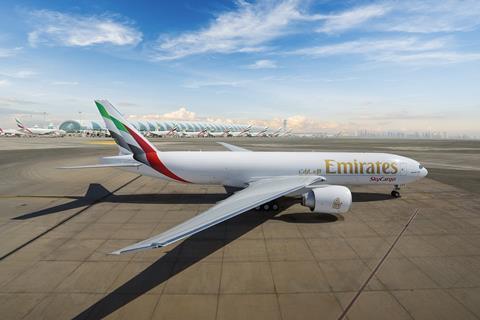
Emirates SkyCargo has warned of potential payload constraints as a result of its aircraft taking on extra fuel due to the ongoing conflicts and geopolitical disruption being experienced in the Middle East.
The Dubai-headquartered cargo airline confirmed the measure yesterday and warned that it could impact the amount of cargo it can carry on flights leaving the city.
“Due to ongoing geopolitical instability in the region, additional fuel is being uplifted on flights departing from Dubai. This may result in payload constraints and shipment offloads,” the airline said in a statement.
”We appreciate your understanding as our teams work diligently to minimise disruptions and ensure shipments are delivered as soon as possible.”
The extra fuel uplift is not the only measure being adopted by Emirates SkyCargo as a result of the Israel-Iran conflict.
Like the majority of carriers, the airline also has an embargo in place covering Iran and Iraq.
The carrier said its embargo on operations to Tehran, Baghdad, Erbil and Basra would remain in place until 30 June at the earliest.
Airline operations to the Middle East have been facing disruption since Israel and Iran began launching missiles against each other on 13 June.
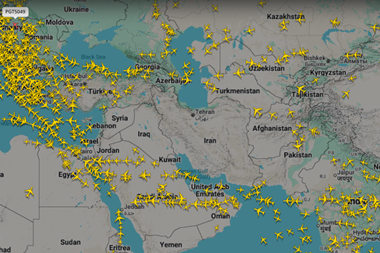
Since then, airlines have been re-routing flights around Iran, Iraq, Syria, Jordan, Lebanon and Kuwait, meaning extra fuel has been taken on.
Airlines have been adding cargo embargoes to many of those countries.
Meanwhile, several airlines cancelled flights to Dubai and Doha over the weekend and on Monday as the US also launched missiles against Iran.
And Qatar Airways temporarily grounded its flights out of Doha yesterday as Iran responded to the US attacks by launching missiles at US bases in Qatar and Doha.
Despite the disruption, cargo capacity to and from the Middle East region appears to be holding firm compared with the start of June.
Rotate figures show that cargo capacity from the Middle East to Europe stood at 13,000 tonnes between Saturday and Monday, around 1,000 tonnes less than between 7-9 June.
In contrast, cargo capacity from Asia Pacific to the Middle East was up between the two periods by 2,000 tonnes to 18,000 tonnes.