




Mark Drusch, Qatar Airways Cargo’s chief officer cargo. Photo: Qatar Airways
Qatar Cargo recorded a double-digit improvement in cargo revenues during the 2024/25 fiscal year, while there was a smaller increase in cargo carried.
The Doha-hubbed airline saw total revenues for the fiscal year running to the end of March increase 17.5% year on year to QAR17.9bn.
However, cargo tonnes carried increased by the lower amount of 1.9% year on year to 3.1m tonnes.
The carrier said it remained the largest cargo airline in the world last year with a market share of 7.1%, according to IATA statistics.
The higher revenues outpaced improved airfreight rates for the year, while the tonnage increase lagged behind overall market performance as the air cargo industry registered a double-digit demand increase last year.
The airline attributed its performance last year to its agility in adapting to shifting market conditions, a focus on investing in digitalisation, deeper data-driven analyses and its best-in-class reliability.
”Investments in fleet expansion and network enhancements enabled new freighter services to Abu Dhabi and Sharjah in the UAE, Vienna, Austria, Kuala Lumpur, Malaysia and London Heathrow, UK. In Asia, frequencies were added to Hong Kong and China,” Qatar Airways said in its results statement.
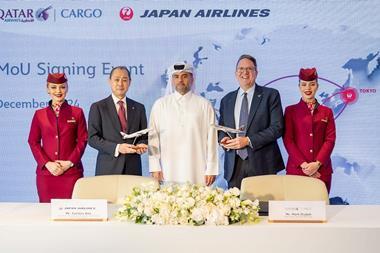
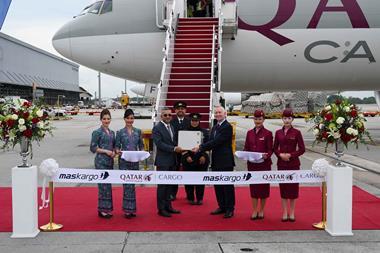
The carrier also focused on further developing its partnerships covering cargo, specifically with MASkargo, e-commerce logistics firm Cainiao, Japan Airlines Cargo, Qatar Postal Services Company (Qatar Post) and MotoGP.
Speaking to Air Cargo News (ACN) earlier in the year, the head of the cargo division, Mark Drusch, outlined how the carrier was focusing on driving flexibility in its freighter network to respond to market developments.
Drusch said the carrier was looking to adjust its freighter network more quickly to changes in market demand and not be led by the passenger side of the business.
This will see the carrier utilise its freighters on routes where demand is high and fully allocated aircraft are required, while the belly network will be utilised in markets where it can cover demand at a lower cost.
Key to improving freighter network profitability is data and Drusch describes himself as a data junkie. He said Qatar Cargo has been investing in its business intelligence tools to provide better visibility.
Back in April, Drusch told ACN that the airline was integrating far more data to understand the flows of markets to better assign capacity and price to reflect the market.
This would give the carrier a more dynamic and analytical approach.
The carrier said that during the year, it also introduced enhancements to its e-booking portal, expanded its omnichannel offering and introduced digitalisation to many of its processes.
Qatar Airways Cargo also claimed to have become the first cargo carrier to allow interline partners to book capacity online during the year.
The overall airline group saw annual net profits increase 28% year on year to QAR7.8bn on the back of record passenger numbers.