




Year-end demand lifted rates on transpacific and Europe routes, but slower monthly gains suggest a tempered peak compared with the prior year

Airfreight rates on key east-west trade lanes ended the year on a high as peak season demand pushed up pricing levels.
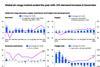
The latest monthly statistics from the Baltic Exchange Airfreight Index, which uses TAC Index data based on spot and contract pricing, showed that air cargo rates from Hong Kong to North America increased by 6.7% month on month in December to reach $6.60 per kg - the highest monthly average recorded this year on the trade.
However, the month-over-month increase of 6.7% lagged behind the 8.5% recorded in 2024, suggesting a slower peak season than 12 months earlier.
While rates on the trade lane have peaked in December over the past few years, that hasn’t always been the case, reflecting changing demand drivers and the rise of e-commerce. In 2015, 2016, 2017 and 2019, rates actually declined between November and December.
Meanwhile, from a year-on-year perspective, rates on the trade closed out the year 1.9% down on December 2024.
While prices ended the year slightly down on 2024 levels, rates on the trade had been as much as 13% behind a year earlier in June as tariff disputes between the US and China and the ending of the de minimis exemption took their toll on demand levels.
However, as the year progressed, the market improved as supply chains resettled with new trade patterns.
Hong Kong-Europe
There was a similar pattern on services between Hong Kong and Europe, where average rates in December reached $5.44 per kg - also a high for the year.
Rates were up 8.8% compared with November - a strong increase based on historical performance between the two months - and 0.9% down on a year earlier.
Year-on-year prices on the trade have performed relatively better than on the transpacific throughout 2025, helped by e-commerce players changing their focus away from the US.
The biggest year-on-year decline in pricing between Hong Kong and Europe came in October when there was a 5.9% drop off.