

Partnership doubles weekly charter flights on key trade corridors as both companies target faster cross-border e-commerce delivery times and enhanced service flexibility for Chinese exporters
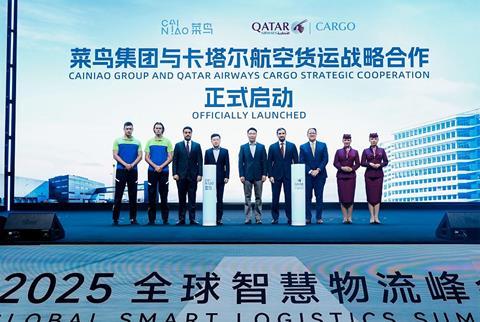
Doha-based Qatar Airways Cargo and Chinese e-commerce logistics giant Cainiao are building on their existing partnership with the launch of an expanded agreement to accelerate cross-border e-commerce delivery.
The alliance will see Cainiao more than double its weekly charter flights on key China–Europe routes to create a broader schedule.
This will give shippers greater flexibility and choice in planning and delivering exports to Europe, while providing stronger support for Chinese businesses expanding internationally.
Mark Drusch, chief officer cargo at Qatar Airways Cargo, said: “China is one of the most important trade partners globally, playing a pivotal role in the evolution of e-commerce and continuing to drive the highest demand for air cargo capacity worldwide.”
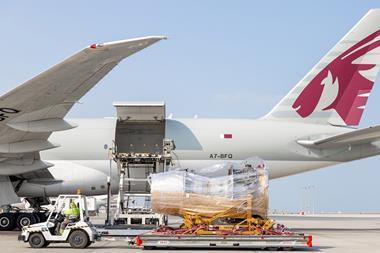
Noting Cainiao’s “leadership in e-commerce logistics” and Qatar Airways Cargo’s “expansive global network and cutting-edge fleet”, which includes 28 Boeing 777 Freighters as well as belly capacity on 230 passenger aircraft.
Drusch added: “This partnership enables us to meet the fast-changing needs of the global e-commerce market and reinforces our presence in one of the world’s busiest and most strategic trade corridors.”
For Cainiao, chief executive Wan Lin said: “Back in 2023, we set new industry benchmarks with the launch of our Global 5-Day Delivery service. This partnership is another step in our ongoing efforts to enhance our product competitiveness and deliver the resilience, speed, and flexibility that today’s fast-changing commerce landscape demands. Together with our partners, we are steadily advancing toward our vision of global delivery within 72 hours.”
Qatar Airways Cargo achieved a double-digit improvement in cargo revenues during its 2024/25 fiscal year; partnerships such as its alliance with Cainiao were among the carrier’s areas of focus during that period.
Last year, the two companies announced the formation of a new partnership that aims to capitalise on the growth of e-commerce.
At the time, details on exactly what the partnership would involve were lacking, with the two companies stating that they would “leverage their complementary strengths through this partnership to enhance global e-commerce logistics and stimulate economic growth at both regional and global levels”.