


As Global GSA marks its 30th anniversary, new leadership outlines expansion plans targeting emerging markets beyond Europe

Last year, the Global GSA Group celebrated its 30th anniversary. Over those three decades, it has grown from a Schiphol-based sales agent into a company boasting a network of offices in 40 countries.
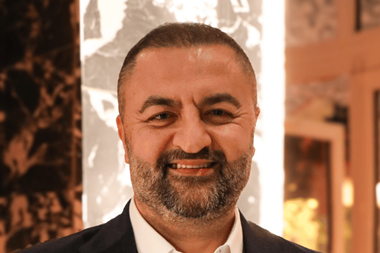
Looking back on the company’s humble beginnings, chairman Ismail Durmaz tells Air Cargo News (ACN) that the company was formed in Amsterdam by current vice president Kitty Liao, Jos Busscher and a third business partner.
Durmaz, who had worked with Busscher at freight forwarder and broker Charter Air, was soon brought in as a shareholder to help develop the sales agent side of the business.
At the time, the company represented a now-defunct airline named Malev, while Liao had built partnerships with China Southern and China Eastern.
Durmaz was also able to use his connections with Turkish Airlines to win its business in the Netherlands.
He explains that Global GSA began representing the two Chinese carriers and Turkish Airlines just as they embarked on the rapid growth that would see them emerge as some of the world’s largest airlines.
As business with Turkish Airlines and the two Chinese carriers expanded, the company began opening offices in new countries such as the UK, Belgium and Germany.
By this point, Durmaz had become a joint majority shareholder alongside Lau. He says the growth of the business was driven more by the need to survive than by any long-term expansion strategy.
“I thought we needed to be in these countries because if there is a large GSA in Germany working with Turkish Airlines, for example, they will say you can do this destination as well.
“There was no business plan; it was just about surviving and keeping the airlines happy.”
“There was no business plan; it was just about surviving and keeping the airlines happy.”
Building connections
Durmaz says he was also able to utilise the close connections he had developed at various freight forwarders while working at cargo facilities at Schiphol at the start of his career.
Over the years, those contacts progressed from operational roles in the cargo buildings to more senior positions.
In the years that followed, the company continued to add new airlines, expand into more new countries and develop a close relationship with Israel-based AD Aviation Services.
The next major milestone came in 2018, when Global GSA was acquired by private equity fund Nexicap, which had recently purchased the major GSA ECS Group.
Durmaz says Global GSA Group has since developed a close relationship with ECS Group, with the two companies partnering on technology, sustainability initiatives and future growth.
“As a result, you have a bigger network, more colleagues, more support, you create synergies,” Durmaz says, adding: “It helped us become more professional.”
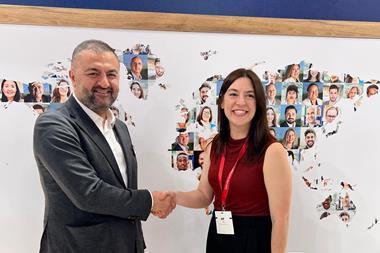
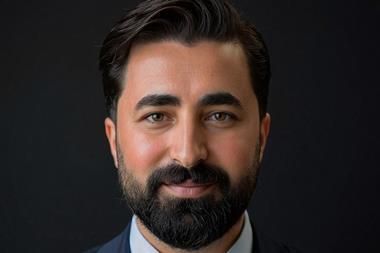
Another significant development came last year when Durmaz moved up to the role of chairman and was replaced as chief executive by Aytekin Saray.
Saray began his airfreight career at Panalpina in 1996 and joined Global GSA Group in 2000 under the mentorship of Durmaz.
Over the years, he played a key role in the group’s expansion and success, notably as chief commercial officer and managing director for Central Europe.
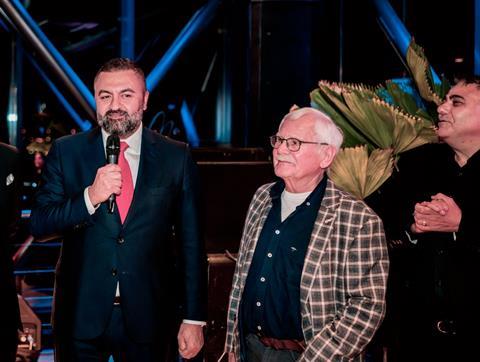
Since taking on the chief executive role, Saray has visited nearly every country in which the group operates to introduce himself.
At the time of speaking to ACN, just three countries remained on his itinerary. Given his ambition to visit them all, he describes his first six months in the role as “hectic but exciting”.
Growth ambitions
Saray says the company has no plans to rest on its laurels and intends to continue expanding in order to provide truly worldwide coverage.
“Today, we are in around 40 countries but the majority are in Europe and we see politics shifting the business from Asia Pacific to India and South America.
“So, we know that our presence is absolutely needed in locations such as the India Subcontinent.
“We know that our presence is absolutely needed in locations such as the India Subcontinent.”
“At the moment, we do not have a presence there but we are working with Air India in many countries so you can see the potential.”
In Asia Pacific, Global GSA currently has a presence in Taiwan, South Korea and Malaysia.
However, Saray says this footprint is “still in baby shoes” compared with competitors, highlighting clear opportunities for further expansion in the region.
South America and the US also present growth opportunities, particularly if manufacturing in the US increases again as a result of US trade policies.
When asked whether the company prefers to build operations from scratch or pursue acquisitions when entering new markets, Saray says it depends on the circumstances.
“I can go to a country, open up and wait until the next tender comes out and hope to score, or you can also have an airline that is asking you, you do a great job for me in Amsterdam, we are planning on opening up something new, can you represent us there?”
“It is easiest if you have a local hero who is active in a couple of countries and fits the DNA of how we work and you can take it over.”
Much of the company’s past growth has come through organic expansion, but in 2022 it acquired Aircargo Italia, Worldair and Star Cargo Italy.
Elsewhere, Saray says the company will continue investing in technology that helps employees improve the service they provide, while emphasising that air cargo remains “a people business”.
“If we can make our lives, airlines’ lives and the market’s lives easier with certain tech tools that can be developed by our CargoTech team and custom made for our team, that will help make us ready for the future,” he says.
Saray describes last year as challenging but notes that the company still met its targets. Looking ahead to the next 12 months, he is optimistic: “The commercial agreements and the files I have pending, in my experience this says it is going to be a very good year.”