


Freight forwarder and logistics provider Geodis is cautious about the air cargo peak season as a potential boost from supply chain disruption could be offset by a recent demand slowdown.
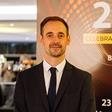
Speaking to Air Cargo News, Henri Le Gouis, Geodis’ executive vice president global freight forwarding, says that the various tariff announcements emanating from the White House this year have resulted in “stop-and-go supply chains”.
“Some weeks are very active because people try to anticipate a decision, and then suddenly you have a period when it is down,” he says.
Looking ahead, if the disruption caused by the tariffs continues, this could boost demand during the peak.
On the other hand, more recent market conditions suggest demand could be slower than would have been expected just a few weeks ago.
“The cumulative effect of all of this stop-and-go is that it will create disruption, and when you are facing emergencies, you need to use airfreight,” he says.
However, he adds: “With the recent slowdown in the past few weeks, I would be more cautious about the year-end outlook [than previously].”
Visibility challenge
Le Gouis says that the lack of visibility is the biggest challenge facing the industry at the moment.
He adds that the US market is particularly difficult to anticipate.
He explains that US companies have been moving goods early to ensure full inventories before tariff increases were implemented.
If the US economy is sluggish, these full inventories could result in weak demand as companies already have enough stock.
Yet, if there is some improvement in US consumer spending, companies could need to rush goods to market once they burn through existing stock levels.
Looking at other locations around the world, Le Gouis says there are still some pockets of strength.
“We see that this global uncertainty is affecting the growth of GDP worldwide,” he says.
“But you still see some new emerging areas. We are very satisfied with the demand levels in Latin America – we see they are growing.
“We also see some growth potential in Southeast Asia and Asia, and we also see parts of eastern Europe and Turkey could come up in the near future.”
Capacity acquisition
On securing airfreight capacity, Le Gouis says that Geodis will continue to run its air charter network, although the operation is not as extensive as it was during the Covid period.
“Today, we have enough capacity on the market not to expand this kind of solution. We are not at a similar point of crisis as we were during Covid.
“We have a strong carrier policy and they have all expressed their support even for the tough periods of fluctuations. So, we feel comfortable with the capacity we could deliver if we face unexpected conditions.”

Source: Geodis
Staying on the topic of capacity, Le Gouis does have some concerns that widebody freighter capacity could come under pressure in the future.
He says the lack of new widebody freighters entering the market, the age of many existing large freighters and potential pilot shortages could put availability under pressure.
“If you put that together, as long as the demand is moderate, we can work things out easily, but if we face a peak, that could be a different issue,” he says.
Acquisition potential
Another hot topic in the forwarding market at the moment is consolidation following DSV’s takeover of DB Schenker - a deal that should create the world’s largest airfreight forwarder.
Le Gouis says that Geodis has been active in acquisitions in recent years, most recently its takeover of German pharma specialist trans-o-flex, and the company continues to keep an eye out for the right opportunity.
“I’m not looking to acquire a giant, but if a solid opportunity arises in the market, and I am convinced there will be some, we are in a situation to invest,” he says.
Any acquisitions are likely to be bolt-on purchases to strengthen Geodis’ position in its focus verticals, such as aerospace, luxury goods and cosmetics and automotive.
On the DB Schenker takeover, Le Gouis is convinced that there could be some fallout with both customers and staff looking to leave the new forwarding giant.
If that is the case, he says Geodis is in a good position to pick them up.
Emissions reduction
In terms of other investments, Geodis recently launched AirSmart, a new low-carbon solution designed to reduce greenhouse gas (GHG) emissions related to airfreight.
AirSmart selects the most energy-efficient aircraft and routeing possible to minimise GHG emissions by leveraging external flight data and advanced analytics tools.
Le Gouis says it is a less expensive alternative to Sustainable Aviation Fuel (SAF).
“We do sell SAF, but with limited success, so we decided to create a different concept. which is AirSmart. It is fully based on efficiency and I think that is the key to developing sustainability in airfreight.”
Le Gouis says the solution could reduce emissions by as much as 30%.
Elsewhere, the company is investing in its pharma hubs; it will soon open a new pharma hub in Chicago, and people as it looks to expand.
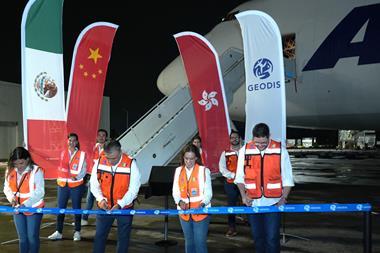
It also recently opened a new office in Guadalajara, Mexico, which will support the company’s expanding operations in the country.
“Our chief executive has expressed in Ambition 2027 a strategic plan to grow,” he says.
“I think Geodis has solid assets to grow: We are strong in the various regions of the world and we are strong in three major products - road, contract logistics, and air & ocean.
“We want to grow based on these pillars in all the different regions, and we have the support of our long-term shareholder, SNCF.”