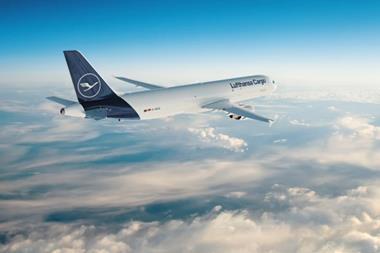




Lufthansa Cargo is targeting a return to the top three global air cargo carriers in terms of volumes over the coming years.
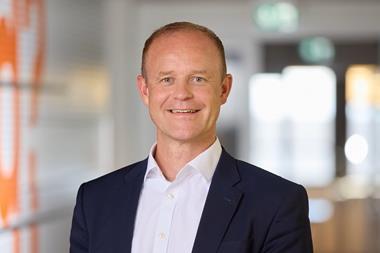
Speaking at the Air Cargo Europe event in Munich, chief financial officer Frank Bauer, who will soon move over to the role of chief operating officer, explained that 20 years ago, Lufthansa Cargo was the largest carrier in the world in terms of cargo tonne km.
Over time, the airline lost its position in the leaderboard and fell to seventh place. However, last year the carrier group climbed one spot to sixth position on the back of 13.5% demand growth.
In the first quarter of this year, the carrier climbed further to the fourth spot as volumes improved by a further 8.9% year on year.
“Our ambition is to get back to the top three, and then we take it from there,” said Bauer.
“There is a very tough competition with the growth rates the Middle East carriers are showing, but we don’t want to lie back and say that is our fate.
“The fate of Lufthansa cargo is a different one, and the growth numbers we were able to achieve are quite encouraging.”
Asked how the carrier would reach its target, Lufthansa Cargo chief executive Ashwin Bhat explained its growth would come through capacity additions and new customer wins based on its quality of service.
On capacity, he pointed out that the group is now able to offer capacity on the services of eight airlines through five hubs.
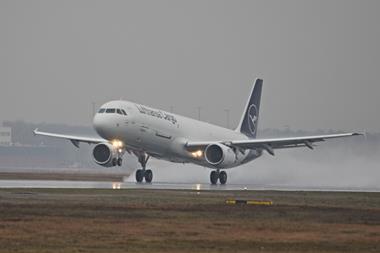
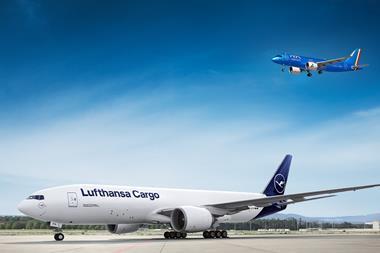
Its hubs include Frankfurt, Munich, Vienna, Brussels, and, from mid-June, Rome, while it can offer cargo capacity on its own cargo aircraft, the AeroLogic joint venture, as well as the belly capacities of Lufthansa Airlines, Austrian Airlines, Brussels Airlines, Discover Airlines, SunExpress, and from 16 June ITA Airways.
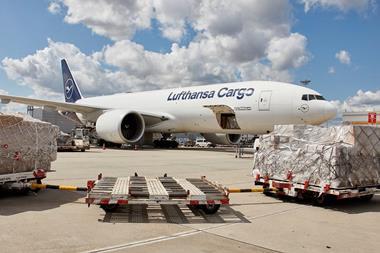
Looking to the future, the carrier has seven 777-8F freighters on order, and Bhat admitted that it would explore further all-cargo orders.
Bauer added that in the past, the carrier has wet-leased freighters, and this is also something it would consider once again, depending on rates.
He also said that the passenger airlines of the group were in the process of replacing many of their older aircraft with more modern models that offer greater cargo capacity, sometimes increasing the available space from 5-10 tonnes per flight to 20-30 tonnes with models such as Airbus A350s and Boeing 777-Xs.
As well as adding capacity, Bhat said the airline group would also look for partnerships with other airlines and expand into new markets with its freighter network.
He pointed out that the carrier would soon add flights to Beirut.
Quality of service is also important to attract new customers: “The brand of Lufthansa Cargo is respected in the market for the reliability, quality and expertise of the people, so we need to focus on this.”
Bhat also emphasised that any growth would need to be fuelled by profitable tonnages: “Growth without profit is accelerated death,” he said.