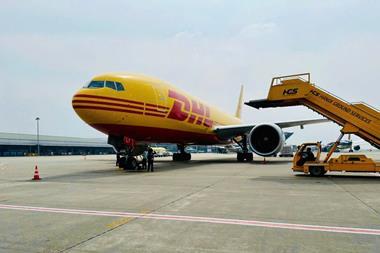



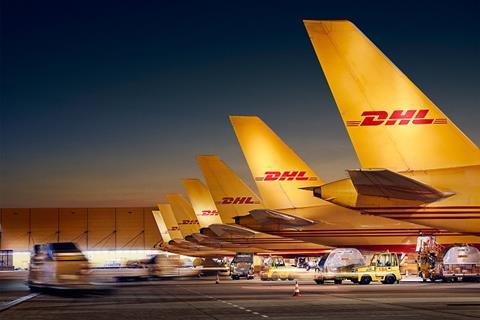
DHL Express has temporarily suspended the transportation of some parcels to the US following the implementation of new requirements for higher value shipments.
The suspension applies to parcels worth more than $800 and comes after new US customs regulations were introduced that reduced the threshold for a formal import procedure from $2,500 to $800.
"This short-term change has caused a significant increase in formal customs clearances and, hence, has increased the workload for customs clearances across the express industry," DHL Express said in a statement.
"DHL Express is working diligently to scale up clearance capacity. However, due to the short-term nature of this substantial change in US customs regulation, shipments over $800 — regardless of origin — may experience multi-day delays.
"To maintain the high-quality service commitment of DHL Express to its customers, starting Monday, 21 April, 2025, and until further notice, DHL Express will temporarily suspend B2C shipments to private individuals in the US whose declared value exceeds $800."
The new regulation is understood to have caused significant additional customs clearance costs.
Business-to-business shipments from companies to companies will continue to be delivered.
Shipments from companies to private individuals with a value of less than $800 will also continue.
Looking ahead, the White House also has plans to clamp down on packages with a value of lower than $800 from China and Hong Kong from 2 May when the de minimis exemption for those locations is due to come to an end.
The US had tried to end the exemption that allows packages worth less than $800 to enter the country tariff-free and with minimal customs scrutiny in February.
But the country was forced to backtrack on its plans when it became clear customs did not have the systems in place to process the millions of packages that arrive from China every day.
The impact of the removal of the de minimis exemption on e-commerce volumes, which has helped fuel a boom in air cargo in recent years, is debated.
Some are expecting it to have a large impact on the market, while others argue that the goods are so cheap anyway that adding a few extra dollars on top won't make too much of a difference.
Others, however, say the need for customs to process packages will slow delivery times and make the overall proposition less attractive to consumers.
There are also expected to be changes to e-commerce supply chains, with Chinese firms utilising a more traditional distribution setup, with warehouses in the US to store goods and an increased use of ocean shipping.
They could also export from countries that are still able to benefit from the de minimis exemption or go through Mexico and Canada.