



Morrison Express chief executive Asok Kumar calls for airlines to add freighter capacity on Taiwan-US routes as semiconductor exports drive record volumes

Morrison Express would like to see more freighter capacity added to the market out of Taiwan to meet rising demand for microchips and semiconductors, while it also expects this year’s modal shift from ocean to air to eventually reverse.
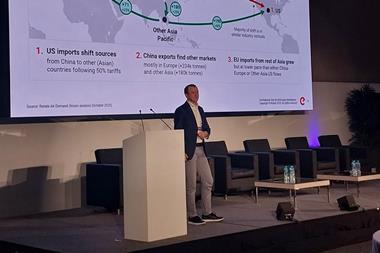
Speaking at the TIACA Air Cargo Forum event, Asok Kumar, chief executive of Taiwan-headquartered Morrison Express, said that volumes out of Taiwan were surging because of demand for chips.
He said that in July volumes out of Taiwan to the US were at record levels, beating even the highs achieved during Covid. Meanwhile, rates on services out of Taiwan were also surging and were the highest to the US in the Asia Pacific region.
Currently, estimates suggest that 80% of all semiconductor chips are produced in Taiwan, Kumar said, while for the more advanced chips, the level is as high as 100%.
He said that airlines should add capacity to the market to help meet the demand.
”From a provider standpoint, I look to the airlines and say help us because that market is constrained,” he said. ”There is a lot of focus around Vietnam, Thailand and Malaysia to a certain extent, and I fully understand that, but Taiwan to the US is really burning.”
Looking ahead, countries like the US are hoping to ramp up their own chip production and companies have announced plans to open production sites in the country.
However, Kumar is still confident in future growth levels.
”If the world’s demand for chips and servers grows by 100% and 50% of that is in the US, you’ve still got 50% of that coming out of Taiwan,” he said.
”If you look at it from a statistical standpoint, I don’t see the demand waning and I don’t see that in the conversations we are having with our customers and I don’t see that in terms of the plans being made for in terms of capacity planning and forward-looking.”
Modal shift
Meanwhile, Kumar said that air cargo had this year benefited from companies looking to quickly import goods into the US ahead of proposed tariff increases.
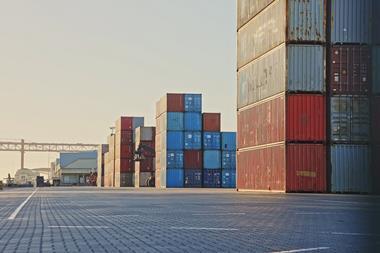
A significant portion of this cargo would have otherwise moved by ocean freight, he said, but the lengthy transit times in container shipping meant this is not a viable option if a company is looking to beat a planned tariff increase.
In the immediate future, air cargo should continue to benefit from this trend, but it is not a structural change and will eventually revert back to ocean.
”We just saw it recently with the situation with China and the US – there was a response with the threat of 100% tariffs on China effective 1 November and then suddenly in October we saw front loading again, even though we saw that in July and September already because of the previous move.
”If these things continue to happen, I see the industry continuing to front load or take actions that are required to circumvent the tariff as much as they can, be it moving to Southeast Asia or be it front loading etc.”
However, looking longer term, he added: ”I think supply chains will find the most effective means to move their goods financially as well, and if you look at the ocean rates, they have picked up a bit but are on a low level and the reliability of ocean has improved significantly.
”So I just see the shippers finding the most effective means to move their goods at a financially credible cost and if you look at how ocean is performing from that perspective, it is doing well.”