



The Airforwarders Association executive director discusses his airfreight career, alongside challenges including tariffs, infrastructure and geopolitical risks
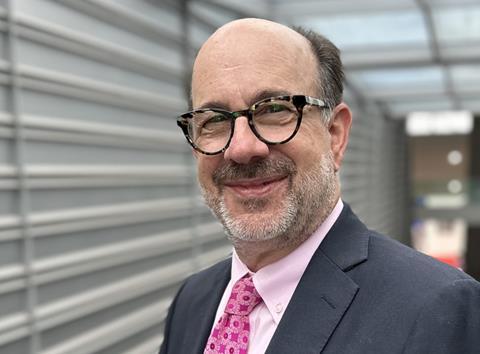
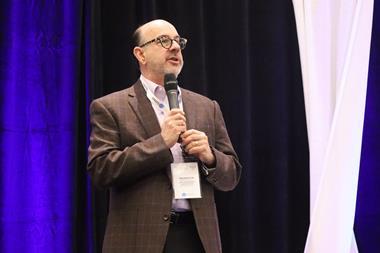
Brandon Fried was that kid who was always hanging outside the fence of his local airport, wondering at the size and speed of the giant planes that roared overhead.
And it’s a love of transportation, or more particularly, the important things that transportation makes happen, that has kept him going all these years in the industry.
“I see it among the Airforwarders Association (AfA) membership every day. They like helping people and solving the complex issues that you get in global trade,” he explains.
Brandon Fried has international freight in his blood. Unlike many in the industry, it wasn’t quite by chance that he ended up working in the sector.
He explains: “I had a relative who was a forwarder. At a young age, they put me to work in the warehouse and then they put me on the phone chasing up overdue bills.”
However, the young Fried had to complete his education, so he went to Syracuse University in New York, where he graduated in Public Policy.
Then it was back to the freight industry, a job with a small forwarder in California.
“I really learned the business there. They specialised in fine art for companies like Sotheby’s and Christie’s. I worked in the office during the day, but at night I was on the loading dock. I’d given my word to buyers that their goods would get to their destination safely – and that was the best way of making sure that happened.”
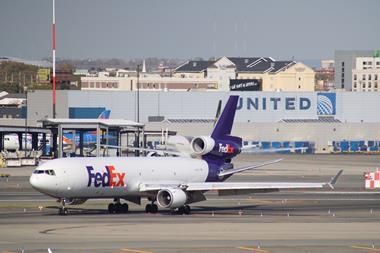
Fried then moved back to his home state, running the office of a small freight forwarder, Adcom Worldwide, that was making a name for itself. “We were competing against FedEx, which actually wasn’t too outlandish in those days, because they themselves were only serving 20 destinations.”
“We were competing against FedEx, which actually wasn’t too outlandish in those days, because they themselves were only serving 20 destinations.”
Washington DC had – and has - a lot of lawyers and an important task was to get pouches of legal documents to the airport – or even train stations – for shipment to New York, Chicago and so on.
“We’d get our documents delivered before FedEx had even hit the ground,” Fried remembers with pride. He has a huge respect for FedEx founder the late Fred Smith.
In time, Fried took ownership of Adcom’s Washington franchise and the company was eventually sold to Radiant Global Logistics, which remains a successful company to this day.
AfA journey begins
By now, Fried was becoming active in the Airforwarders Association (AfA) and was to be elected chair in 2001. The Chinese have a saying about living in interesting times, and of course, the 9/11 terrorist attack happened on Fried’s watch.
“It was a seminal moment,” he recalls. “All these years, the industry had been under the radar while we were putting boxes on planes. The next thing, I was testifying before Congress and the Transportation Security Administration (TSA) was up and running. There were people then who wanted to pull all freight off passenger planes.”
In the febrile atmosphere of the time, that meant visits to the White House and much interaction with legislators and regulators to hammer out the security system, based on screening and ‘known shippers’ that we have today.
Having sold his business, Fried was asked by the AfA to come and run the association full time in 2005. That degree in Public Policy came in useful because “not only did I understand the issues, but I could also explain them to the people on Capitol Hill”.
The AfA has since gone from strength to strength and now numbers 225 corporate members, including most of the major domestic US players and the US arms of international forwarders.
But Fried would not dream of taking all the credit: “We have a very active board and I like to say that I have 15 bosses. I may serve as the face of the organisation, but there are a lot of people standing behind me – lobbyists, communications people and legal advisors.”
It’s vital to keep advocating for forwarders because, “in Washington, you are either at the table or you’re on the menu”. The industry must keep fighting its corner and explain to all who will listen how vital it is to the continued prosperity of the US.
Trying to prise open closed minds is one of the most difficult parts of his job, and one of the most important things AfA does is to take Capitol Hill staffers to see typical air cargo facilities and explain how the industry works and the rigorous security measures that are in place.
It also shows them the sheer variety of cargo that the industry moves and how time is not just money, but sometimes life itself.
“Think of human organs going for transplant – that could be for a member of your family.”
“Airfreight often gets taken for granted because it works, most of the time,” Fried explains.
Safety first
The US airfreight industry is, in fact, far safer than it was on 9/11. Cargo is accepted only from known entities and there are rigorous screening and security programmes.
However, transport security is forever a work in progress, a task that will never be complete. “Don’t forget, some of the bad guys are highly intelligent. And they only have to be right once; we have to be right every day. So we know what’s at stake.”
“Don’t forget, some of the bad guys are highly intelligent. And they only have to be right once; we have to be right every day. So we know what’s at stake.”
Security might be the thing that most keeps Brandon Fried awake at night, but there are plenty of other important matters that are major issues in their own right. Indeed, their number has been increasing lately.
There’s fraud, the long-lingering issue of airport congestion, ageing airfreight terminals that are unfit for purpose – though last year’s Infrastructure Bill offers some hope for improvement - the rise of the low-cost carrier and consequent downgrading of bellyhold freight capacity and, of course, Trump’s tariffs and the ending of de minimis customs rules.
Add to that a scary geopolitical situation with Ukraine, Gaza and Taiwan.
In Fried’s view, tariffs at the levels that are being proposed will do nothing but hurt, not only the freight industry, but the entire US economy.
While the desire to recreate manufacturing jobs is laudable, the fact that the US did a poor job in retraining its workforce for the new high-tech global economy is more to blame than any machinations by its foreign trading partners.
And the huge policy uncertainty swirling around the US is anything but conducive to investment. He also finds the current administration’s willingness to alienate old friends like the Canadians and British rather baffling.
Once again, AfA has to try and persuade people to listen to its arguments, people who may not always have the most open minds: “Yes, there are smart people in the administration but they are maybe a tad misguided and they’re seeing all the perspectives.”
The world has moved on massively since the 1950s and 60s; everything is much more globalised. “When I was a kid, making an overseas phone call was a really big deal. Younger people may not appreciate that it wasn’t always so easy to move packages between countries.”
Sometimes, it’s hard to appreciate just how far we have come, thanks in large part to globalisation and the international freight industry. Taking that for granted and reversing the progress of decades would be a tragedy.